
The first call usually comes from someone who is not an operator. A resident two streets over. A council member who had three emails about it waiting before 8am. A plant manager fielding a question from corporate that he cannot answer yet.
By the time a complaint reaches the people who actually run the lagoon, the smell has already done its damage, and the conversation jumps straight to how fast it can be made to stop. That is an understandable question. It is also the wrong first one. Wastewater lagoon odor is information, and it is the only process indicator that leaves your site on its own and reports to the public before it reports to you.
Odor also tends to arrive early. It shows up while dissolved oxygen is still drifting down, before effluent numbers cross a permit threshold, which puts an operator ahead of a compliance problem instead of behind one.
What follows is how to read it. What specific smells indicate, why turnover produces sudden odor events that appear to come out of nowhere, and the measurable conditions that almost always show up alongside the smell.
Why a Working Lagoon Does Not Smell
Persistent wastewater lagoon odor is not the cost of doing business. EPA’s compliance guidance for small lagoons states that most properly designed and operated systems should not produce objectionable odors at all.
The reason is oxygen. Aerobic biology runs stable and largely odorless, because compounds that would otherwise smell get oxidized before they reach the air. Take the oxygen away and sulfate-reducing bacteria move in, producing the hydrogen sulfide behind that rotten egg smell.
Facultative lagoons handle this in layers. Sulfide forms in the anaerobic bottom, then gets oxidized on the way up through the aerobic surface layer, where algae keep replenishing the oxygen doing the work. Generated below, neutralized above, and nobody smells a thing.
Then the surface layer thins.
Oxidation stops keeping pace, gas that was being handled underwater breaks through, and the odor at the fence line becomes the first outward sign of a balance that shifted weeks ago. Sludge accumulation, poor mixing, and falling dissolved oxygen are the usual drivers.
Reading Wastewater Lagoon Odor: What the Smell Is Pointing To
Odor alone is a starting point, not a diagnosis. What narrows it down is what shows up alongside the smell, because an identical rotten egg odor can mean a slow slide into anaerobic conditions or a two week seasonal event that resolves on its own.
| What You’re Also Seeing | Likely Signal | Check First |
|---|---|---|
| Rotten egg smell, persistent | Anaerobic conditions producing hydrogen sulfide | DO at depth, sludge blanket depth, mixing coverage |
| Sudden strong odor in spring or fall, dark water, floating sludge | Seasonal turnover releasing trapped gas | Days elapsed, effluent TSS and BOD |
| Odor with low effluent pH, high BOD, low DO throughout | Organic overloading | Influent strength, recent industrial discharges |
| Odor with a visible algae bloom | Odorous byproducts from algae, including blue green species | Surface coverage, whether the bloom is dying off |
| Ammonia-type or sharply pungent smell | Nitrogen loading; cold temperatures suppress nitrification | Ammonia results, water temperature |
Timing sharpens the read. Gradual buildup over weeks points to something slow like sludge accumulation. Overnight onset, strong enough to generate calls by breakfast, is a different event, and in spring or fall it usually means turnover.
One caveat on trusting your nose. Hydrogen sulfide is detectable at 0.5 parts per billion, which is what makes it such an early indicator, but ATSDR notes that above roughly 100 ppm most people cannot smell it at all. Excellent early warning system. Unreliable safety instrument.
Why Spring and Fall Odor Is Usually Turnover
Sudden severe odor in spring or fall is most often turnover, a seasonal event rather than a system failure.
What Turnover Actually Does
Wisconsin DNR describes turnover as the seasonal mixing of a pond’s water column, driven by temperature and density differences between top and bottom plus wind action. Stratified layers destabilize, mix, and stir up settled solids.
That stirring is what releases the odor. Months of anaerobic digestion produce hydrogen sulfide trapped in the sludge blanket. Turnover dislodges the material holding it, and a season’s worth of gas surfaces in days.
Which is why turnover odor feels like it came from nowhere. To a resident calling the city, it did appear overnight. To the lagoon, it had been building since the water column last mixed.
The Two Week Test
EPA and Wisconsin DNR give operators a number to work with: turnover typically lasts 3 to 14 days. Alongside the sulfurous smell, they document four things worth logging.
- Dark or murky water
- Floating sludge
- Elevated TSS and BOD in the effluent
- Low dissolved oxygen
Clearing inside two weeks means turnover behaved the way turnover should. Past that, EPA is explicit that extended events point to underlying issues, and the honest read is that turnover was the trigger rather than the cause. Something was already compromised, and seasonal mixing exposed it. Usually an accumulated sludge blanket deep enough that the lagoon cannot recover from being disturbed.
The Warning Signs Behind the Smell
Odor rarely arrives alone. By the time it reaches the fence line, other indicators have usually been moving in the same direction for a while, and they are measurable long before anyone complains.
Six things are worth watching, and each one tells you something different about where the process is slipping.
Rising sludge accumulation. The most common driver. As the blanket thickens, oxygen stops reaching the bottom and the biology that should be digesting solids shuts down instead.
Inadequate mixing. Dead zones are where odor starts. If mixing energy is not reaching a section of the lagoon, that section is running without treatment regardless of what the rest of the system looks like.
Falling dissolved oxygen. The clearest early warning available, and the one most likely to show up in data before it shows up in the air. Worth reading at depth, not just at the surface.
Seasonal shifts in biological activity. Cold water slows the bacteria doing the work, which is why odor complaints cluster in specific months rather than spreading evenly across the year.
Ammonia spikes. Point toward nitrogen loading the system is not fully processing. Cold temperatures make it harder, since nitrifying bacteria are the first to struggle when water temperature drops.
Areas of poor circulation. Visible on the surface as stagnant patches, scum accumulation, or water that simply looks different from the rest of the lagoon. Trust what you can see.
Individually, any one of these can be noise. Together, they are a pattern, and the pattern is what makes odor useful. Catching two or three moving in the same direction gives you a window to act before the first phone call, which is a considerably better position than responding to complaints after they arrive.
What Actually Fixes Wastewater Lagoon Odor
Effective odor control targets the conditions producing the odor, not the odor itself.
Masking agents and chemical dosing treat what reaches the air. Sulfide keeps forming at the bottom regardless, so the smell returns as soon as dosing stops.
Restoring aerobic conditions is what ends the cycle. Oxygen has to reach depth, and mixing has to cover the entire lagoon, because oxygen that never reaches a dead zone does nothing about the odor forming there. Aeration without adequate mixing leaves most of the lagoon untreated, the trap we cover in lagoon aeration and mixing.
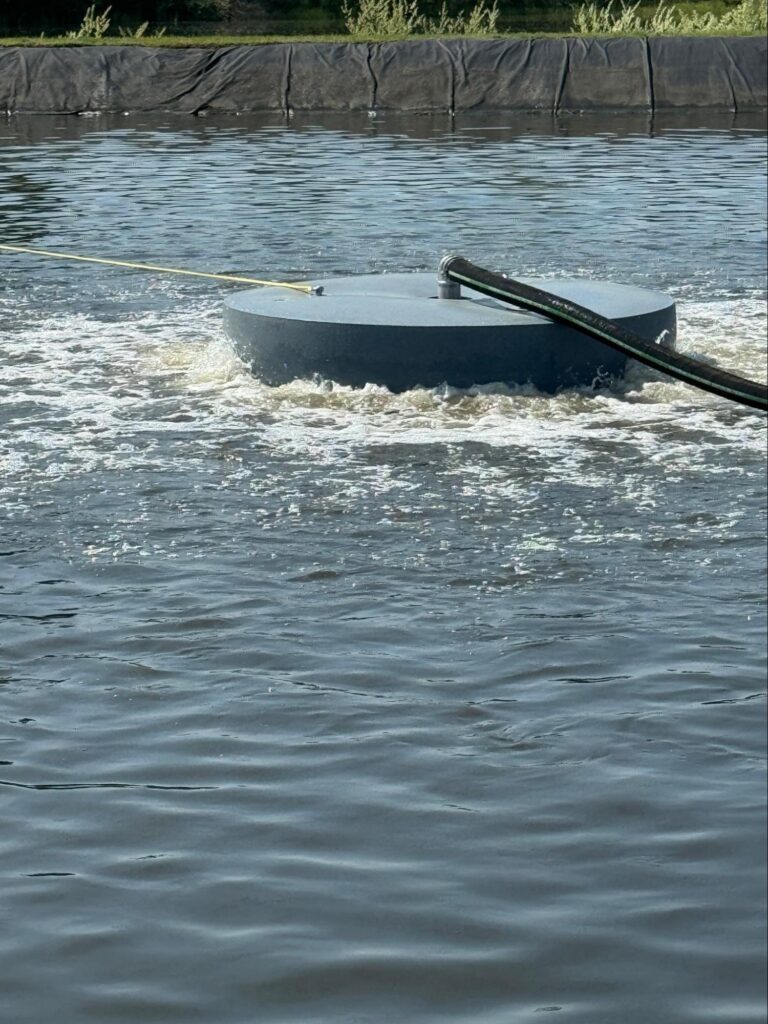
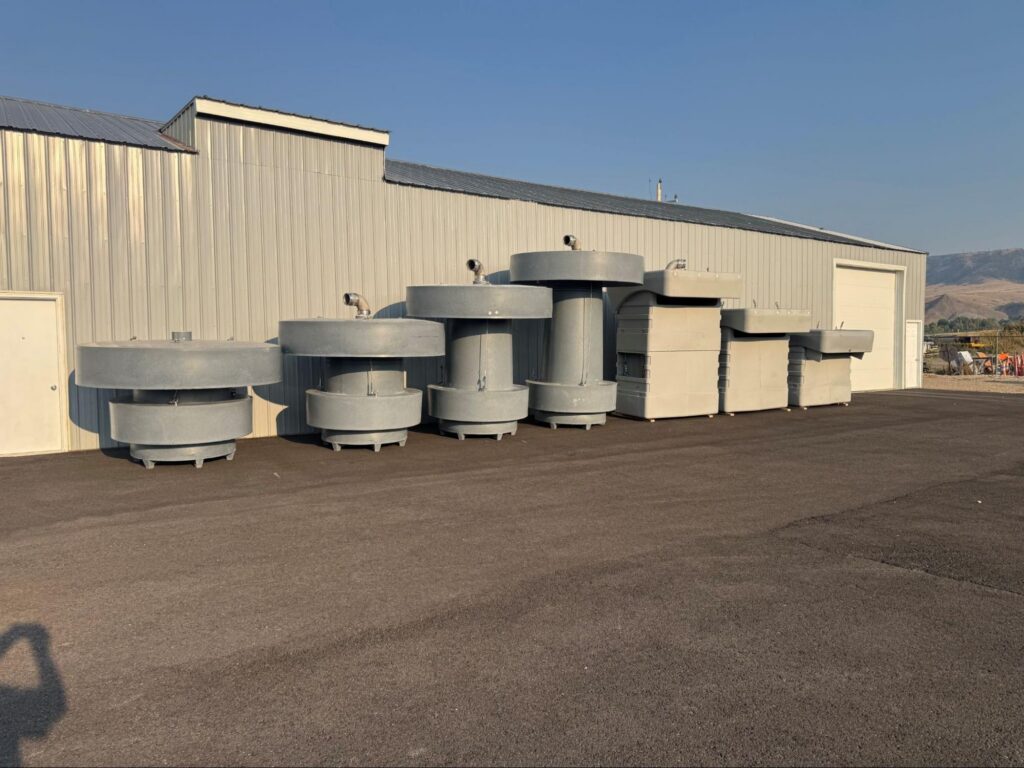
Titus Wastewater Solutions builds equipment for exactly this. The Twister FL Floating Aerator delivers full-lagoon circulation and oxygen transfer at depth with no moving parts in the water. The Twister SDF handles directional flow where dead zones persist.
Wastewater Lagoon Odor FAQs
Is wastewater lagoon odor dangerous to nearby residents?
At fence-line concentrations, lagoon odor is a nuisance rather than a health hazard. Hydrogen sulfide is detectable far below harmful levels, which is why neighbors smell it long before it poses risk. The exposure concern is inside confined spaces at the facility, not in the surrounding neighborhood.
Can lagoon odor be resolved without dredging?
Usually, yes. Dredging removes accumulated sludge but does not correct what caused it to accumulate, which is why lagoons often need it again years later. Restoring mixing and oxygen lets the lagoon’s own biology reduce the sludge blanket, addressing the odor and the accumulation together.
How soon does odor improve once mixing is restored?
Improvement tracks dissolved oxygen recovery rather than a fixed schedule. Odor typically drops noticeably well before sludge levels change measurably, since sulfide production slows as soon as anaerobic zones shrink. Lagoon size, sludge depth, and water temperature all affect the timeline, so expect progress rather than an overnight fix.
Does persistent odor mean our lagoon is out of compliance?
Odor itself is generally not a permit violation, but it often accompanies conditions that are. The elevated TSS and BOD that show up alongside odor events are what create real compliance exposure. Treating odor as an early indicator gives you room to correct effluent numbers before they cross a threshold.
Which Titus product is right for our lagoon?
It depends on lagoon geometry and where the problem zones sit. The Twister FL Floating Aerator suits lagoons needing broad circulation and oxygen transfer throughout. Facilities with persistent dead zones in specific areas often need directional flow instead. A conversation about your lagoon’s layout is the fastest way to sort it.
Is wastewater lagoon odor dangerous to nearby residents?
At fence-line concentrations, lagoon odor is a nuisance rather than a health hazard. Hydrogen sulfide is detectable far below harmful levels, which is why neighbors smell it long before it poses risk. The exposure concern is inside confined spaces at the facility, not in the surrounding neighborhood.
Can lagoon odor be resolved without dredging?
Usually, yes. Dredging removes accumulated sludge but does not correct what caused it to accumulate, which is why lagoons often need it again years later. Restoring mixing and oxygen lets the lagoon’s own biology reduce the sludge blanket, addressing the odor and the accumulation together.
How soon does odor improve once mixing is restored?
Improvement tracks dissolved oxygen recovery rather than a fixed schedule. Odor typically drops noticeably well before sludge levels change measurably, since sulfide production slows as soon as anaerobic zones shrink. Lagoon size, sludge depth, and water temperature all affect the timeline, so expect progress rather than an overnight fix.
Does persistent odor mean our lagoon is out of compliance?
Odor itself is generally not a permit violation, but it often accompanies conditions that are. The elevated TSS and BOD that show up alongside odor events are what create real compliance exposure. Treating odor as an early indicator gives you room to correct effluent numbers before they cross a threshold.
Which Titus product is right for our lagoon?
It depends on lagoon geometry and where the problem zones sit. The Twister FL Floating Aerator suits lagoons needing broad circulation and oxygen transfer throughout. Facilities with persistent dead zones in specific areas often need directional flow instead. A conversation about your lagoon’s layout is the fastest way to sort it.
Start Treating Odor as Data
Odor complaints are frustrating. They are also the earliest and cheapest diagnostic signal a lagoon produces, and the only one that reports itself without being sampled.
Read alongside DO trends, sludge depth, and the season, the smell tells you whether you are looking at a two week turnover event or a sludge blanket that has been building for years. Operators who make that read early get to fix a process problem. Operators who wait get to answer phone calls.
If your lagoon is producing odor you cannot account for, contact the Titus WWS team and we will help you work out what it is actually reporting.