
Walk into a wastewater facility that is struggling and the complaints tend to sound the same. The lagoon smells. Sludge levels are climbing. Dissolved oxygen readings are dropping. Discharge permit numbers are getting harder to hit, maintenance costs are skyrocketing and if a bottom diffused air system is used the pressure is steadily going up, DO levels are dropping, and efficiency is falling off a cliff!
Most operators know something is wrong. The harder question is why.
At Titus Wastewater Solutions, this is the conversation we have with facilities across the country. The symptoms are real, but they are rarely the actual problem. In most lagoon systems, persistent odors, rising sludge, and permit pressure share a common origin, and focusing on the symptoms without identifying that origin is what keeps facilities stuck in the same cycle year after year.
Wastewater lagoon sludge buildup, persistent odors, and permit pressure rarely happen in isolation. In most cases, they share a common origin, and it starts well before the sludge layer gets deep enough to measure. Lagoon sludge accumulation is almost always a process failure, not a maintenance one, and that distinction changes everything about how you fix it.
This article breaks down what is actually driving lagoon performance problems, why the most common response tends to make things worse, and what operators can do to correct the real issue.
The Symptoms Operators Keep Seeing
Most lagoon problems announce themselves the same way. These are the warning signs operators report most often, and what each one is actually signaling beneath the surface:
- Lagoon Odors: That rotten-egg smell is hydrogen sulfide (H2S) gas. It is not a sign of a dirty lagoon. It is a sign of an anaerobic one, where oxygen has been cut off and the biology has shifted into a mode that produces toxic, odorous byproducts that create complaints, safety concerns, and regulatory attention.
- Rising Sludge Levels: Sludge that keeps climbing means the biological process responsible for breaking down volatile solids is no longer working properly.
- Dropping Dissolved Oxygen: Low DO readings indicate that oxygen is not reaching the areas of the lagoon where it is needed most. Parts of the system are running without adequate treatment capacity, and the effluent quality reflects it.
- Permit Pressure: Discharge limits that used to be manageable become a recurring compliance risk when treatment capacity shrinks.
- Shrinking Lagoon Capacity: As sludge accumulates, usable lagoon volume decreases, solids retention time shortens, and every other performance problem on this list gets harder to control.
None of these are the root problem. They are what the root problem looks like once it has already been building for months or years. Operators who focus exclusively on managing these symptoms will find themselves in a cycle of escalating costs and diminishing returns, because the underlying cause is still running unchecked beneath the surface.
The Hidden Chain Reaction
In most struggling lagoon systems, the problems on that list do not show up randomly. They show up in sequence, and they almost always trace back to the same starting point: POOR MIXING.
When a lagoon is not mixing properly, water circulation slows and solids begin settling in areas with little or no mixing influence. Those deposits accumulate over time, and as they grow, oxygen stops reaching them. Once that happens, the biology in those zones shifts from aerobic to anaerobic.
That shift is where the chain reaction begins.
Anaerobic sludge produces hydrogen sulfide gas, which is responsible for the rotten-egg odor that travels well beyond the facility fence line. At the same time, the accumulating sludge layer physically reduces the volume of the lagoon available for treatment. Less usable volume means a shorter solids retention time or SRT, which means the system has less time to process what is coming in. Treatment performance drops, effluent quality suffers, and permit compliance becomes harder to maintain.
By the time most operators are dealing with odor complaints or permit pressure, the sludge layer has already been building for a long time. The symptoms are visible. The cause is not.
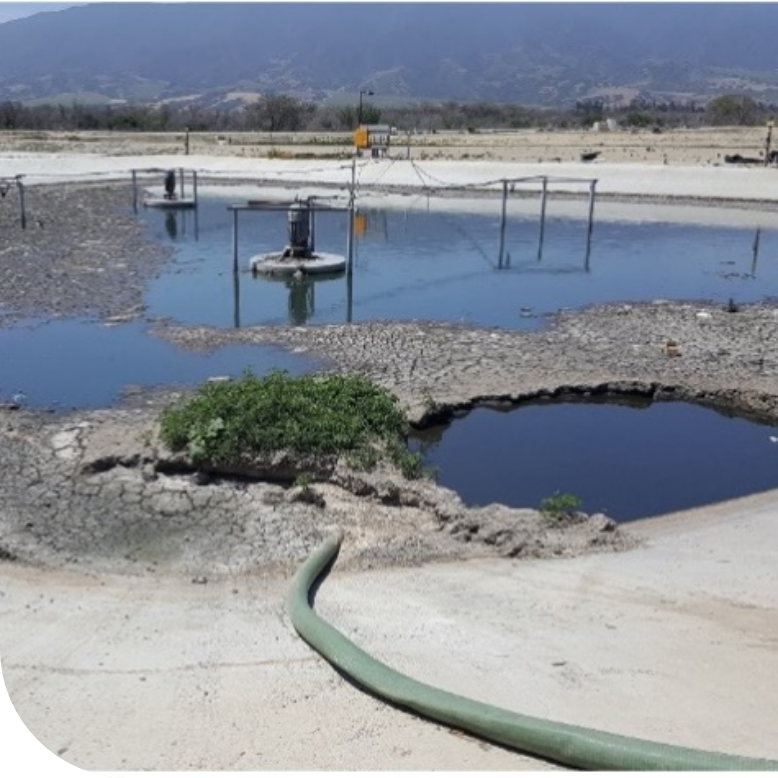
Why Dredging Is the Default (and Why That’s a Problem)
When lagoon performance deteriorates far enough, most facilities land on the same solution: dredging. It is the most visible, most familiar response to a sludge problem, and for many operators it feels like the only option available.
The problem is that dredging is one of the most expensive interventions in wastewater management, and it does not fix what caused the sludge to build up in the first place.
| Dredging Cost Factor | Reality |
| Physical sludge removal | Often incomplete, sludge in dead zones is difficult to fully extract, and the possibility of damaging the liner is high |
| Transport and disposal | Significant added cost on top of the removal itself |
| Odor during disturbance | Disturbing years of accumulated sludge creates major odor events |
| Project cost range | Commonly runs into six or seven figures |
| Long term outcome | Sludge returns if the root cause is never fixed |
“I am working on a project right now where they spent two million dollars dredging a lagoon and they did not even get it all out,” says Lewis Titus. “That money did not solve the problem. The conditions that created the sludge are still there.“
For many facilities, dredging becomes a recurring cost rather than a one-time fix, because the root cause was never addressed.
The Root Cause Most Operators Miss
Wastewater lagoon sludge does not appear because a facility is poorly run. It appears because the conditions inside the lagoon allow it to. Understanding what creates those conditions is the difference between a system that keeps declining and one that actually recovers.
Poor Mixing Creates Dead Zones
In a lagoon that is not mixing adequately, water circulation is uneven. Some areas receive consistent flow and oxygenation. Others do not. Those low-flow areas become dead zones, places where solids settle and oxygen levels drop to near zero. Most traditional aeration systems leave significant portions of the lagoon unmixed, which means dead zones are far more common than operators realize. The lagoon can appear to be functioning from the surface while large portions of it are effectively untreated.
Dead Zones Become Sludge Traps
Once a dead zone forms, it starts collecting solids. Over time, lagoon sludge accumulation in these zones reduces usable treatment volume and shortens solids retention time. By the time sludge levels are visibly climbing, those dead zones have typically been active for months without anyone realizing the process had broken down.
Anaerobic Conditions Shut Down the Biology
As the sludge layer thickens and oxygen disappears, the biology shifts. Aerobic bacteria, which are responsible for breaking down volatile solids, cannot survive without oxygen. Anaerobic bacteria take over, and their byproducts are what operators eventually see and smell: hydrogen sulfide gas, rising BOD, and effluent that no longer meets discharge standards.
This is also where a critical opportunity gets lost. When aerobic conditions are maintained and mixing is adequate, bacteria can actually digest volatile solids and reduce the sludge layer over time, breaking material down into what is essentially inert residue at the bottom of the lagoon. Operators sometimes describe it as the ash at the bottom of a bonfire. Once conditions turn anaerobic, that biological process stops, and the sludge simply keeps building.
The Cycle Continues Until the Cause Is Addressed
Every symptom on an operator’s problem list can be traced back to this sequence. Treating any one of them individually without addressing lagoon mixing is what keeps facilities in a cycle of recurring costs and declining performance. The root cause of wastewater lagoon sludge problems is almost never the sludge itself.
This is not a maintenance problem. It is a process problem. And that distinction is exactly what determines whether the solution actually works.
What It Actually Takes to Fix a Wastewater Lagoon Sludge Problem
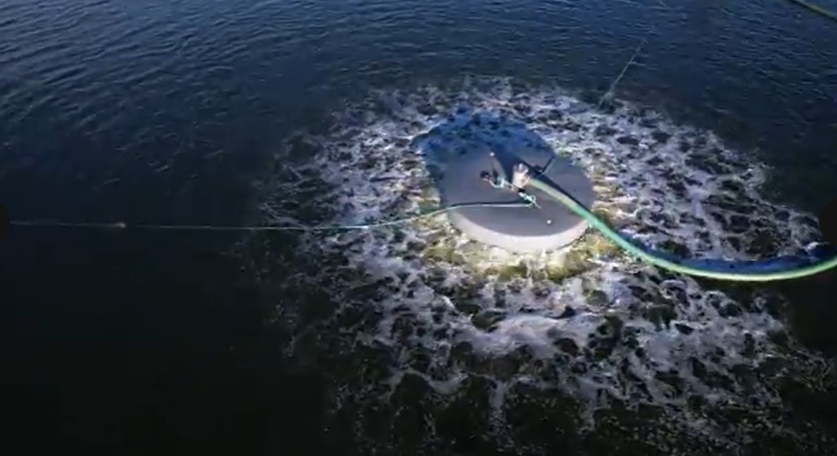
The goal is not to remove the sludge. The goal is to restore the conditions that allow the lagoon’s own biology to break it down. When mixing is improved and oxygen reaches the zones where sludge has been accumulating, the system can begin recovering on its own. At Titus Wastewater Solutions, this is the foundation of how we approach lagoon sludge problems.
Here is what that recovery actually looks like:
- Dissolved oxygen reaches dead zones. When mixing is restored, oxygen penetrates the areas of the lagoon that have been running anaerobic. Aerobic bacteria reactivate and begin digesting volatile solids that have been accumulating for months or years.
- The sludge layer begins to reduce. As volatile solids are broken down biologically, the sludge layer shrinks. What remains is stable, inert material that no longer contributes to the cycle of accumulation and performance decline.
- Odors decrease. As anaerobic conditions are reversed and hydrogen sulfide production slows, odor levels drop. Facilities that have dealt with chronic neighbor complaints often see a significant difference.
- Treatment capacity returns. As the sludge layer reduces, usable lagoon volume increases. Solids retention time improves and the system regains the treatment capacity it lost.
- Dredging gets pushed out or avoided entirely. When biology is doing its job, the urgency and frequency of costly dredging projects decreases significantly.
When the right conditions are in place, the lagoon does most of the work. The TITUS Twister FL Floating Aerator, and the TITUS Floating Directional Flow Aerators are specifically designed to create and maintain those conditions, even in lagoons where traditional aeration systems have already failed.
FAQs about Wastewater Lagoon Sludge
What causes sludge to build up in a wastewater lagoon?
Lagoon sludge buildup is almost always caused by inadequate mixing. When circulation is poor, solids settle in low-flow areas and oxygen stops reaching them. Without oxygen, the biological process that breaks down volatile solids shuts down and sludge accumulates. It is a process failure, not a maintenance one.
How do you reduce sludge in a lagoon without dredging?
By restoring the conditions that allow aerobic bacteria to digest volatile solids biologically. When mixing is improved and oxygen reaches dead zones, the sludge layer can reduce over time without physical removal. Explore our TITUS WWS products to see how that process works in practice.
Why does my wastewater lagoon smell?
Lagoon odors are hydrogen sulfide gas produced by anaerobic bacteria. Fixing it starts with understanding the underlying odor sources rather than masking the smell. Addressing the root cause is the only way to resolve it long term.
What is solids retention time and why does it matter?
SRT is how long solids remain in the lagoon for biological treatment. As sludge accumulates and usable volume shrinks, SRT drops. When it falls too low, the system cannot process incoming load fast enough, effluent quality deteriorates, and permit compliance becomes difficult to maintain consistently.
How does poor mixing affect lagoon treatment performance?
Poor mixing creates dead zones where solids settle and anaerobic conditions develop. Those zones produce odors, reduce treatment capacity, and accelerate sludge accumulation. Left unaddressed, the effects compound until the entire lagoon system is underperforming.
What causes sludge to build up in a wastewater lagoon?
Lagoon sludge buildup is almost always caused by inadequate mixing. When circulation is poor, solids settle in low-flow areas and oxygen stops reaching them. Without oxygen, the biological process that breaks down volatile solids shuts down and sludge accumulates. It is a process failure, not a maintenance one.
How do you reduce sludge in a lagoon without dredging?
By restoring the conditions that allow aerobic bacteria to digest volatile solids biologically. When mixing is improved and oxygen reaches dead zones, the sludge layer can reduce over time without physical removal. Explore our TITUS WWS products to see how that process works in practice.
Why does my wastewater lagoon smell?
Lagoon odors are hydrogen sulfide gas produced by anaerobic bacteria. Fixing it starts with understanding the underlying odor sources rather than masking the smell. Addressing the root cause is the only way to resolve it long term.
What is solids retention time and why does it matter?
SRT is how long solids remain in the lagoon for biological treatment. As sludge accumulates and usable volume shrinks, SRT drops. When it falls too low, the system cannot process incoming load fast enough, effluent quality deteriorates, and permit compliance becomes difficult to maintain consistently.
How does poor mixing affect lagoon treatment performance?
Poor mixing creates dead zones where solids settle and anaerobic conditions develop. Those zones produce odors, reduce treatment capacity, and accelerate sludge accumulation. Left unaddressed, the effects compound until the entire lagoon system is underperforming.
Ready to Stop Treating Symptoms?
Every lagoon system is different, but one principle applies almost universally. When operators focus only on symptoms, they miss the opportunity to correct the underlying cause. When they identify the root problem, solutions become far clearer and often far less expensive.
Wastewater lagoon sludge problems are fixable. But only when the right questions are being asked.
If your facility is dealing with rising sludge, persistent odors, or permit pressure, Titus Wastewater Solutions can help you identify what is actually driving the problem. Contact our team of experts to start the conversation.
And if you want to understand why fixing the mixing is only part of the equation, stay tuned for Part 2 of this series.