
When municipalities evaluate inflow and infiltration in wastewater systems, the focus often falls on buried assets such as pipes, joints, laterals, and groundwater intrusion. Those components play an important role in overall system performance.
However, one of the most direct and controllable sources of manhole I&I is frequently overlooked because it sits in plain sight at street level.
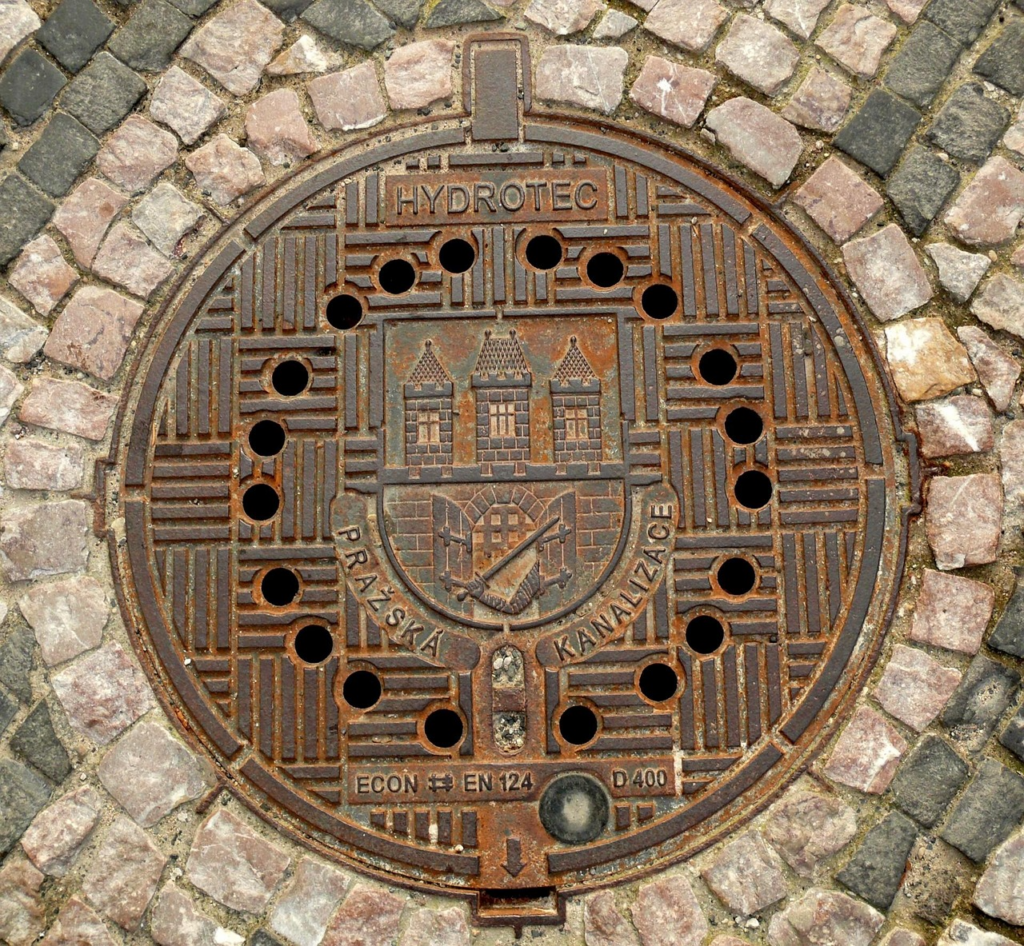
Manhole access structures can introduce significant volumes of stormwater into collection systems during wet-weather events. Traditional cast iron lids with vent openings were never intended to resist ponding conditions. When rainfall accumulates at the surface, those openings can effectively function as storm drains, allowing surface water to flow directly into the sanitary system.
This article examines how access design contributes to manhole I&I, why lid-level inflow can overwhelm collection systems faster than many subsurface leaks, and how composite manhole infrastructure allows municipalities to better control inflow while maintaining balanced system performance.
How Lid-Level Inflow Amplifies Wet-Weather Flow
In many wastewater systems, cast iron manhole covers include vent holes intended to equalize pressure within the collection system. While these openings may seem minor, they can become a significant contributor to manhole I&I during wet-weather events. When rainfall accumulates at the surface and water ponds over the lid, those vent holes provide a direct pathway for stormwater to enter the sanitary system. Even small openings can convey large volumes of water under head pressure, especially during intense or prolonged storms.
As this surface inflow is multiplied across multiple vent holes and numerous manholes within a basin, lid-level inflow can rapidly drive sharp increases in wet-weather flow at downstream treatment facilities. These spikes often occur early in a storm, before groundwater-driven infiltration through pipes or joints has time to influence the system. The result is an immediate surge in influent volume that can strain treatment capacity, reduce process efficiency, and increase the risk of bypasses, overflows, or surcharge conditions across the collection system.
In many cases, these operational impacts are not caused by deterioration below grade, but by access structures that were never designed to remain watertight under ponded or submerged conditions. By allowing stormwater to enter at street level, traditional manhole covers can unintentionally turn the collection system into an extension of the storm drainage network, amplifying wet-weather challenges that might otherwise be manageable.
Composite Covers and Eliminating Direct Inflow Paths
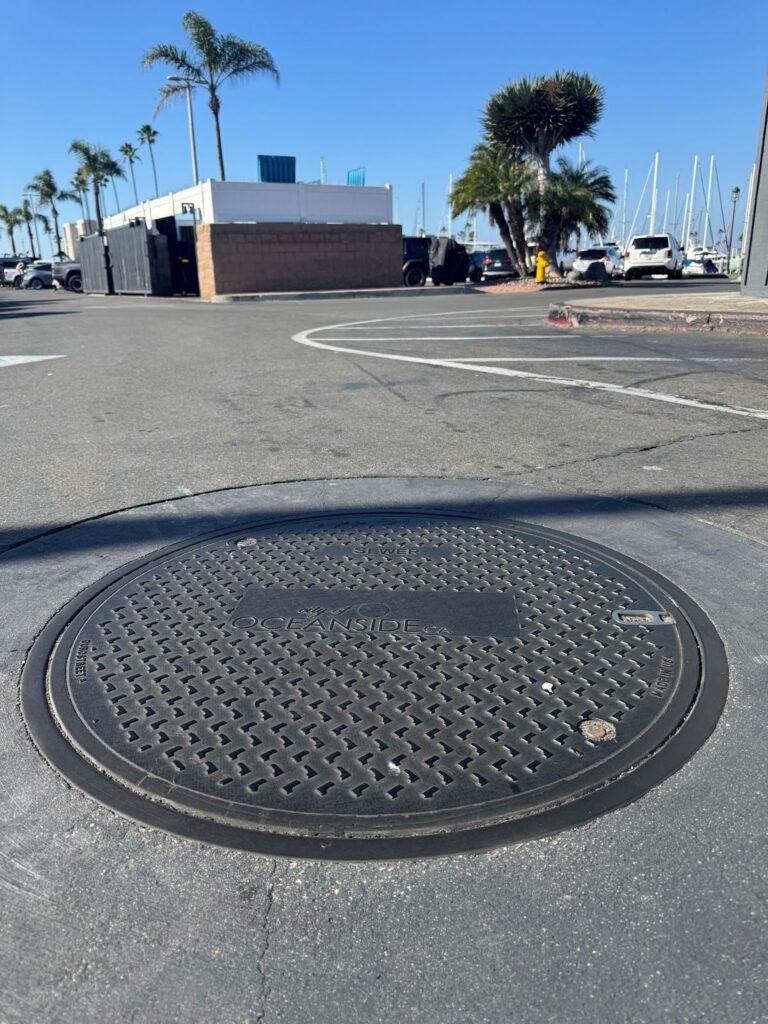
Composite manhole covers approach access design differently by eliminating vent openings in the lid itself, directly addressing one of the most visible contributors to manhole I&I. In properly engineered collection systems, pressure equalization already occurs through building vents, service laterals, and other designed pathways, which allows composite access covers to eliminate lid-level venting without compromising system performance.
When paired with solid lid geometry and properly engineered seating surfaces, composite covers help municipalities reduce manhole I&I in several important ways:
- Eliminating direct surface inflow by removing vent openings that allow standing water to enter during ponding conditions.
- Reducing rapid inflow during surcharge events when lids are submerged or temporarily pressurized.
- Stabilizing wet-weather flow patterns by preventing localized inflow spikes.
- Improving overall system control by addressing inflow at the access point rather than relying solely on downstream treatment capacity.
For municipalities experiencing wet-weather overflows or operating near capacity limits, addressing inflow at the manhole cover can represent a targeted improvement with measurable, system-wide benefits.
Matching Seal Performance to System Needs
Not every manhole requires the same level of sealing performance. In fact, attempting to eliminate all moisture movement across an entire collection system can introduce new operational challenges. Systems that are sealed too aggressively can lose critical carrier water, leading to poor solids transport and increased maintenance demands downstream.
Composite manhole systems give municipalities the ability to apply sealing strategies selectively, based on location, operating conditions, and risk profile rather than relying on a one-size-fits-all approach, as discussed in earlier considerations of manhole system performance.
Standard Composite Covers
Standard composite covers provide a tight interface between the lid and frame while allowing minimal, controlled seepage under extreme conditions. In areas where limited inflow does not negatively affect system performance, this approach supports balanced hydraulics while still reducing unnecessary surface water entry.
Watertight Composite Covers
Watertight composite covers use O-rings and cam-locking mechanisms to actively compress seals between the lid and seating surface. This design prevents infiltration even during sustained ponding or submergence, making it well suited for high-risk locations where lid-level inflow directly contributes to overflows or capacity constraints.
By offering multiple sealing options, composite access systems allow utilities to target high-risk basins, chronic overflow areas, and flood-prone locations without over-engineering lower-risk portions of the collection system.
Integrating Access Design Into Broader I&I Strategies
Manhole I&I rarely exists in isolation. It is often part of a broader pattern that includes deteriorated frames, misaligned chimneys, cracked barrel sections, and aging coatings. Addressing access design alongside rehabilitation efforts allows municipalities to eliminate multiple inflow pathways at once, rather than treating individual symptoms within the collection system. When considered from a system-level perspective, composite manhole infrastructure is most effective when it is coordinated with broader I&I reduction efforts and aligned with earlier discussions on manhole rehabilitation and materials.
- Completing Corrosion-Resistant Manhole Systems
Pairing composite frames and covers with internal linings creates a continuous, corrosion-resistant structure from the barrel to the lid. This integrated approach reduces manhole I&I at multiple interfaces while improving long-term structural performance within the collection system. - Targeting High-Inflow Locations Strategically
During basin-level improvements, upgrading known inflow hotspots with sealed composite access assemblies allows utilities to focus I&I control where it produces the greatest operational benefit. This targeted strategy helps stabilize wet-weather flow without unnecessary upgrades elsewhere. - Protecting Flood-Prone and Coastal Infrastructure
In low-lying or tidal areas, watertight access design prevents floodwater and storm surge from entering the sanitary system through manhole openings. Controlling surface inflow at these locations is often critical to managing wet-weather impacts and regulatory risk.
Rather than pursuing isolated fixes, this integrated approach allows utilities to control how and where water enters the system under varying operating conditions.
Balancing Control, Performance, and Longevity
Effective I&I management requires balance. Reducing unnecessary inflow improves system capacity and lowers treatment costs, but collection systems still depend on sufficient flow to transport solids and maintain hydraulic performance. Overcorrecting in pursuit of I&I reduction can introduce new operational challenges, shifting problems downstream rather than resolving them. Composite manhole systems support a more measured approach by allowing utilities to tailor access design to actual operating conditions instead of applying uniform solutions across the entire system.
Beyond inflow control, composite infrastructure contributes to long-term asset performance in ways that extend well past wet-weather events. Corrosion resistance at grade helps preserve critical interfaces, while lighter components improve worker safety and handling. Structural reliability under traffic loading and the absence of scrap value further reduce long-term risk related to damage, theft, and unauthorized access. When evaluated as part of a broader access strategy, these combined benefits position composite systems as long-term infrastructure investments rather than single-issue fixes focused solely on I&I.
Planning for Smarter Access Control
Reducing I&I starts with understanding how access structures interact with surface conditions, system hydraulics, and operational goals across the collection system. Decisions made at grade can either amplify wet-weather challenges or provide one of the most effective opportunities to bring inflow under control.
At Titus Wastewater Solutions, access design is evaluated through the lens of real operating conditions, long-term system performance, and practical field experience. For municipalities assessing manhole I&I reduction strategies or planning targeted upgrades, reach out to the composite manhole specialists at Titus Wastewater Solutions to clarify where access control measures deliver the greatest operational value. These conversations help align access improvements with broader rehabilitation efforts and support predictable, defensible outcomes over the life of the system.