
Why Composite Manholes Are Reshaping Municipal Infrastructure

For decades, cast iron has been the default material for manholes, largely because it was familiar and widely accepted. But in practice, that familiarity has come with tradeoffs that many municipalities continue to absorb every day, from worker injuries and access delays to corrosion-related failures and persistent noise complaints. According to Lewis Titus of Titus […]
From Complaints to Compliments: The Lift Station Demo That Speaks for Itself
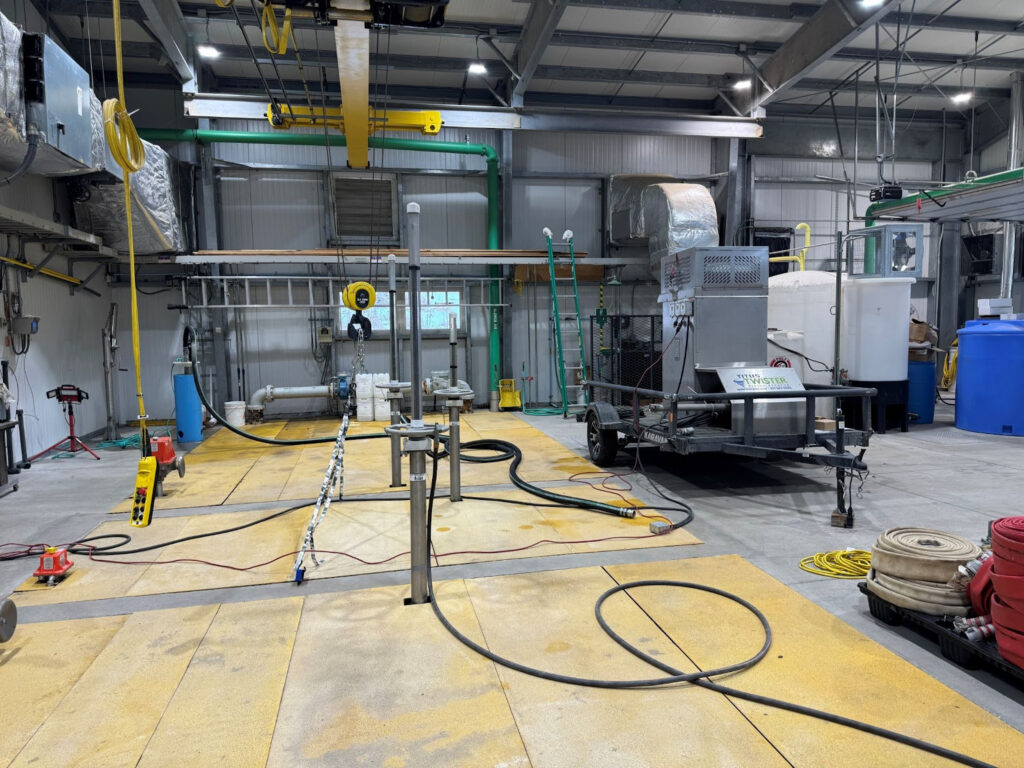
Wastewater odor complaints can overwhelm an operator’s day long before the first truck even rolls out. Neighbors call. Crews investigate. The smell fades, then comes roaring back without warning. For many municipalities, the pattern feels endless and the fix almost always seems to involve more chemicals, more equipment, or more trial-and-error than anyone has time […]
What Lightning and Lift Stations Have in Common: Ozone Wastewater Treatment in Action

Wastewater odor rarely comes from the places people expect. As we explored in Part 1 of this series, the real culprits often hide inside the system itself. Biofilm inside a force main, dissolved sulfides produced under anaerobic conditions, or unexpected industrial inputs can overwhelm an entire collection system. Once those compounds reach the air, the […]
More Than Just Poop: The Hidden Enemies of Wastewater Odor Control

When people think of wastewater odor, the knee-jerk reaction is often, “Well, it must be the poop.” And to be fair, that assumption isn’t completely off base. But if you ask Lewis Titus, founder of Titus Wastewater Solutions and trusted advisor to municipalities across the country, it is more than just an oversimplification. It is […]
Advancing Wastewater Aeration Technology: Airlift Innovation for Oxidation Ditches

Oxidation ditches, or “racetracks,” have been a trusted upgrade from lagoon systems for decades. Their closed-loop design supports long solids retention times (SRT) and dependable biological treatment. Yet one challenge has persisted: how to aerate and circulate water effectively within the ditch. Traditional mechanical aerators such as brushes, discs, and low-speed surface units have long […]
The Hidden Costs of Brush, Disc, and Low Speed Surface Aerators in Oxidation Ditches and the Better Alternative

Oxidation ditches, or “racetracks” as many operators call them, have been a workhorse in wastewater treatment for decades. They provide a controlled environment for aerobic digestion, keeping solids suspended and oxygen levels high enough for bacteria to do their work. But while the process is dependable, oxidation ditch aeration has often been the weak link. […]
Smarter Sludge Management – Part 3: How Floating Aeration Enhances Odor Control, Compliance, and Cost-Efficient Lagoon Performance

In Parts 1 and 2 of this series, we explored the challenge of sludge buildup in municipal and industrial lagoons—and how floating aeration, particularly the Titus FL Floating Aerator, provides a powerful and cost-effective alternative to dredging. By delivering deep, continuous mixing and robust oxygen transfer, these systems redefine what’s possible in lagoon sludge management. […]
Sludge Reduction Without the Freeze – Part 2: How Floating Aeration Cuts Costs and Delivers Year-Round Performance

In Part 1 of this series, we explored the hidden costs of sludge buildup in municipal and industrial lagoons and why traditional aeration systems often fall short in truly addressing the problem. Now in Part 2, we’ll look more closely at how harsh seasonal conditions, rising BOD loads, and ever-tightening budgets create even greater barriers […]
Rethinking Sludge Remediation – Part 1: How the Right Aeration Technology Transforms Municipal and Industrial Lagoons

Sludge buildup in municipal and industrial wastewater lagoons is a growing and costly challenge. Across North America, operators are facing rising maintenance costs, shrinking lagoon capacity, non-compliance risks, and frequent dredging bills that can run into hundreds of thousands—even millions—of dollars. And yet, most lagoon systems are still relying on outdated or misapplied aeration technologies […]