
Oxidation ditches, or “racetracks” as many operators call them, have been a workhorse in wastewater treatment for decades. They provide a controlled environment for aerobic digestion, keeping solids suspended and oxygen levels high enough for bacteria to do their work. But while the process is dependable, oxidation ditch aeration has often been the weak link.
Most plants still rely on brush, disc, and low speed surface aerators to move water and add oxygen. In practice, these machines struggle to keep solids fully suspended, allowing sludge to build up at ditch ends and reducing overall treatment performance. On top of that, constant breakdowns, safety risks, and mounting maintenance costs drain both time and budgets.
The good news is that new technology is changing the equation. The Titus Wastewater Solutions Twister SDF (Stationary Directional Flow) Aerator offers a smarter approach to oxidation ditch aeration that reduces maintenance demands, improves solids suspension, and delivers reliable treatment operators can depend on.
The Standard Approach: Brushes, Discs, and Low Speed Surface Aerators
In most wastewater treatment aeration systems, oxidation ditches are powered by brush aerators, disc aerators, or low-speed surface aerators. These machines stretch across the ditch with large paddles or discs that churn the water at the surface. Their job is twofold: introduce oxygen into the flow and maintain the directional current that keeps solids moving around the racetrack. For years this setup has been considered standard practice, but time has shown that it is far from efficient.
The reality is that brush and disc aerators come loaded with moving parts that are constantly exposed to harsh operating conditions. Shafts, belts, bearings, and gearboxes take a continual beating and require frequent attention. On paper, this equipment looks like a straightforward way to handle oxidation ditch aeration, but in practice it becomes one of the most maintenance-intensive components in the entire plant. When a paddle cracks or a gearbox seizes, the cost of repair is only the start. Downtime, compliance risk, and staff hours quickly add up, leaving operators with an aeration method that consumes more resources than it saves.
Maintenance Nightmares for Operators
For many operators, keeping brush aerators alive is a constant battle. Every repair is dirty and labor-intensive, often stretching into long hours just to get equipment back online. Winter only compounds the frustration, as spray from the ditch freezes on walkways and turns routine service into a safety hazard. Taking one aerator offline can interrupt oxidation ditch aeration, and with only a few machines driving the system, a single breakdown puts compliance at risk. The more operators stay on top of repairs, the more they find new problems waiting, from cracked paddles to worn bearings and seized gearboxes that demand immediate attention.
Over time, this cycle wears down more than just equipment. It drains budgets, pulls staff away from higher-value tasks, and leaves teams feeling like they are constantly reacting instead of running the process with confidence. For many plants, brush and disc aerators have become less of a solution and more of a liability.
Performance Inefficiencies in Oxidation Ditch Aeration
Brush and disc aerators can keep the surface moving, but their design leaves critical gaps in treatment. Because they only oxygenate water at the top, the lower levels of the ditch are often starved of dissolved oxygen, a challenge noted in the EPA oxidation ditch fact sheet. From a distance, the racetrack looks like it is performing as expected, yet beneath the surface the process is falling short.
Common inefficiencies include:
- Surface-limited oxygen transfer: Dissolved oxygen is abundant at the top but drops to near zero at the bottom.
- Poor solids mixing: Without enough circulation through the water column, solids settle out, especially at ditch ends.
- Chronic sludge accumulation: Settled material gradually fills the channel until dredging or mechanical removal becomes unavoidable.
- High energy demand: The horsepower required to churn surface water does not translate into consistent treatment results.
- Constant equipment strain: The heavy mechanical workload accelerates wear, leading to shortened lifespans and frequent repairs.
Operators have seen how severe these issues can become. In one Idaho facility, a sludge survey revealed solids piled almost to the surface at one end of the ditch. Problems like this are common when oxidation ditch aeration relies on surface aerators, and they show why outdated mechanical systems struggle to deliver reliable performance.
The Biological Impact of Better Aeration
Mechanical aerators do more than wear out equipment; they also disrupt the biology inside the racetrack. Uneven oxygen transfer means the microorganisms responsible for aerobic digestion cannot perform consistently throughout the ditch. At the surface, dissolved oxygen levels may be high, but at the bottom bacteria are often left oxygen-starved, creating unstable treatment conditions.
When oxygen distribution is this inconsistent, microbial communities struggle to fully break down organic matter. Solids accumulate reducing SRT (solids retention time), sludge ages unevenly, and effluent quality declines. Plants may experience higher total suspended solids, unexpected ammonia spikes, or the need for additional downstream treatment to remain in compliance. These biological inefficiencies often stay hidden until a permit limit is missed or dredging becomes unavoidable.
Reliable oxidation ditch aeration should support biology as much as mechanics. By providing uniform dissolved oxygen and keeping solids suspended throughout the entire water column, a system not only reduces sludge buildup but also strengthens the microbial communities that drive wastewater treatment. This connection between equipment performance and biological health is often underestimated, yet it remains one of the most important factors in consistent compliance.
The Bigger Picture: Lifecycle Costs That Add Up
When evaluating aeration systems, it is tempting to focus only on the purchase price of brush and disc aerators. On paper, these machines can look like a reasonable investment for wastewater treatment. In practice, the real expense appears over time as hidden costs accumulate. Replacement parts, gearbox rebuilds, labor hours, and unplanned downtime all combine to make oxidation ditch aeration far more expensive than many budgets anticipate.
Energy consumption is another overlooked factor. Surface aerators require significant horsepower to churn water at the surface, yet much of that effort fails to translate into consistent oxygen transfer. The result is high utility bills without a matching return in treatment efficiency. Add to that the frequent need for dredging or mechanical solids removal, and the financial picture becomes even heavier.
The strain also falls on plant staff. Every emergency callout for a failed aerator pulls operators away from higher-value work and adds stress to an already demanding job. Seasonal conditions add another layer of cost, as winter maintenance often requires extra time and safety precautions. These indirect expenses are rarely visible on a budget sheet, but over the life of the equipment, they represent a major financial drain across the industries we serve.
When all of these elements are considered together, brush, disc, and low speed surface aerators often prove to be one of the most expensive choices for a plant. The true cost is not just in the purchase price, but in years of labor, energy, safety risk, and emergency response.
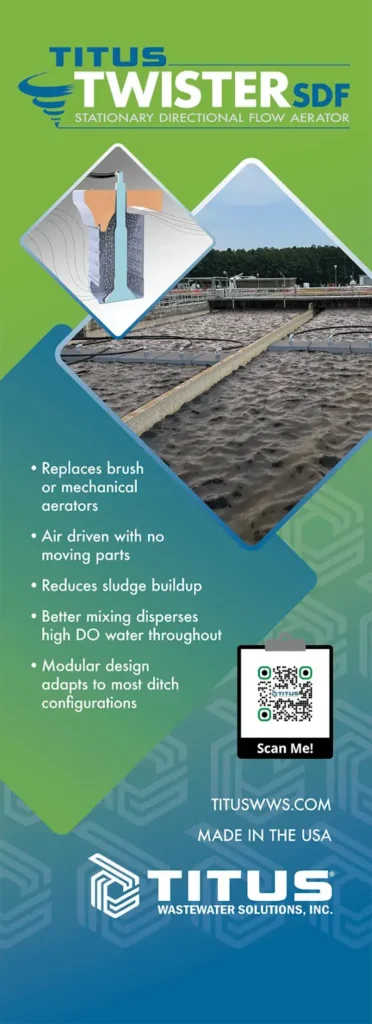
A Smarter Approach with the Titus Twister SDF Aerator
After years of struggling with surface aerators, many utilities are ready for a different solution. The Titus Twister SDF Aerator was designed specifically for oxidation ditch aeration and represents a completely different way of thinking about how racetracks are mixed and aerated. Instead of relying on heavy mechanical equipment inside the wastewater, it applies a simple but highly effective principle: airlift technology.
Unlike brushes or discs, the SDF has no moving parts in the wastewater itself. It uses an airlift pump and fine bubble diffuser to create steady directional flow while delivering oxygen throughout the entire water column. This approach eliminates the surface-only limitations of traditional equipment, keeps solids suspended from top to bottom, and reduces the risks that come with constant repairs. The result is a system built for reliability and efficiency, rather than one that consumes staff hours and budgets. That means:
- Fewer breakdowns: No shafts, paddles, or gearboxes in the water to fail.
- Better treatment: Dissolved oxygen is distributed evenly throughout the water column, supporting stronger biological performance.
- Less sludge buildup: Continuous circulation keeps solids fully suspended, reducing the need for dredging.
- Operator relief: Installation is straightforward, maintenance is minimal, and equipment can be serviced safely from dry land.
- Retrofit-ready: Modular units can be set into existing oxidation ditches without major reconstruction, saving both time and capital.
For operators, the difference is immediate. Instead of spending their days chasing repairs, they can focus on process performance and trust that the aeration system is doing its job. By addressing the core weaknesses of brush and disc aerators, the Titus Twister SDF offers a practical and long-term path forward for oxidation ditch aeration.
Escaping the Cycle of Repairs
Oxidation ditches remain one of the most reliable treatment processes in wastewater, brush, disc, and low speed surface aerators make them harder to operate than they should be. The constant cycle of breakdowns, sludge buildup, and rising maintenance costs has left many plants frustrated and searching for a better answer.
The Titus Twister SDF Aerator delivers that answer. By combining directional flow with fine-bubble aeration, it provides consistent oxygen transfer, keeps solids suspended, and eliminates the weakest points of traditional systems. For operators committed to dependable oxidation ditch aeration, the question is no longer whether the problems exist, but how soon they want them solved. Ready to break free from constant aerator repairs? Contact TITUS Wastewater Solutions today to see how the Titus Twister SDF can transform your oxidation ditch aeration.