
Wastewater odor rarely comes from the places people expect. As we explored in Part 1 of this series, the real culprits often hide inside the system itself. Biofilm inside a force main, dissolved sulfides produced under anaerobic conditions, or unexpected industrial inputs can overwhelm an entire collection system. Once those compounds reach the air, the odor is already a symptom rather than the cause.
This is why ozone wastewater treatment enters the conversation at this stage.
Lewis Titus, founder of Titus Wastewater Solutions, often reminds operators where ozone comes from in nature. “That fresh, clean smell in the air after a lightning storm? That is ozone,” he explains. “A single bolt of lightning can produce up to 300 pounds of it.”
In wastewater, ozone is not valuable because it smells clean. It is valuable because of what it does inside the system. It interacts directly with dissolved sulfides, fats, oils, grease, and the biological processes that drive odor formation long before complaints ever reach a utility’s inbox.
What Is Ozone and Why Does It Work So Well?
Ozone (O₃) is a reactive form of oxygen that contains three oxygen atoms. It forms naturally in the atmosphere during lightning storms, and it can also be generated on site for wastewater applications. Lewis Titus explains it simply: “It is an equal opportunity oxidizer. If it can be oxidized, ozone will do it.”
This reactivity is what makes ozone wastewater treatment so effective. Inside lift stations and force mains, odor does not begin in the air. It forms in the liquid phase where dissolved sulfides, fats, oils, grease, and organic solids interact under anaerobic conditions. When ozone enters this environment, it targets the compounds responsible for odor formation long before they become gases that reach the surface.
In wastewater systems, ozone aggressively neutralizes several key contributors to odor, including:
- Hydrogen sulfide (H₂S), the compound responsible for the familiar rotten egg smell.
- Ammonia which enters through urine and certain industrial discharges.
- Fats, oils, and grease (FOG), common contributors to odor formation and frequent maintenance challenges.
- Biofilm and organic sludge that accumulate inside force mains and wet wells over time.
These reactions happen quickly, and ozone breaks down without leaving behind secondary pollutants or chemical byproducts. It is created and used on site, and it interacts directly with the compounds that drive odor complaints. This makes ozone a practical and effective tool for municipalities that want to treat odor at its source instead of masking symptoms after they reach the atmosphere.
Ozone vs. Chemicals: Why the Shift Matters
Chemical odor control has been used in wastewater systems for decades, but it often treats the symptom rather than the source. Over time, systems can become dependent on repeated dosing, and the underlying causes of odor remain active.
| How Chemical Programs Behave | How Ozone Behaves |
| Provide temporary suppression of odorRequire ongoing storage, delivery, and dosingIntroduce additional substances into the systemMay lose effectiveness as conditions change | Reacts with odor-forming compounds inside the wastewaterIs generated on site from ambient airDoes not create resistanceBegins working within seconds once injected |
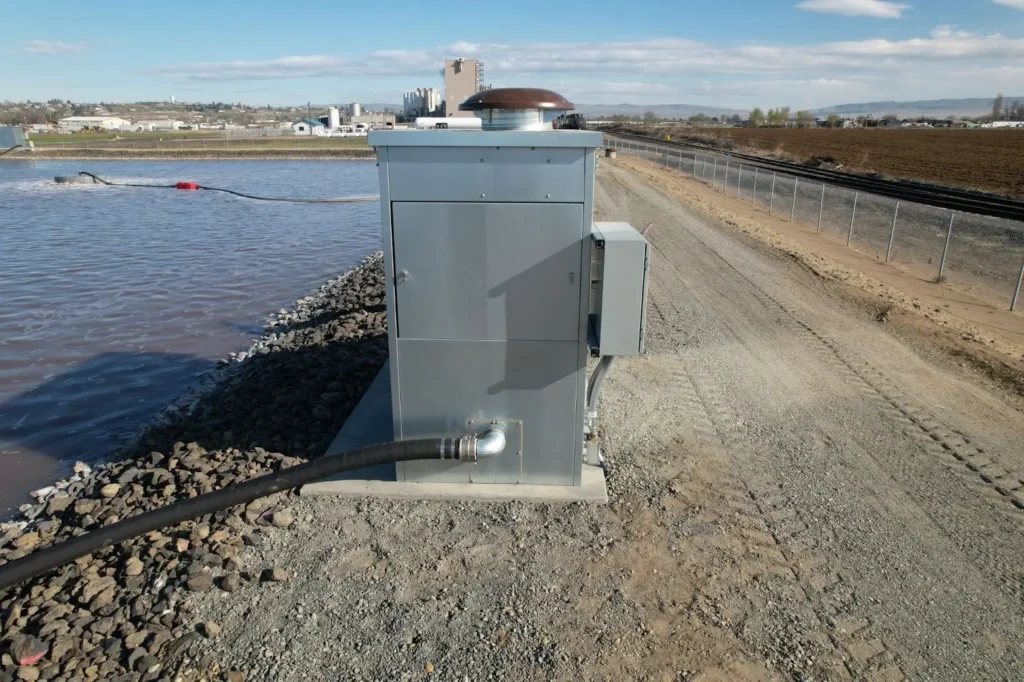
Operators often see an immediate difference. “Once we drop a Titus Twister unit into a dirty lift station and turn on the ozone, the smell is usually gone within five minutes,” Lewis Titus says. The immediate response from a Titus Twister unit helps stabilize the station while improving long-term operating conditions.
How Ozone Wastewater Treatment Works Inside Lift Stations
The Titus Twister injects ozone directly into the wastewater rather than releasing it into the air. This approach is important because the reaction has to happen in the liquid phase to reach the compounds that create odor. Fogging ozone into the atmosphere offers very little benefit, but delivering it into the wastewater allows it to reach dissolved sulfides, FOG, and other organic material where they are most concentrated.
Lewis Titus explains it simply: “We do not fog it into the atmosphere,” he says. “We inject it into the liquid phase so it reacts with the compounds we want to eliminate.”
Introducing ozone this way gives operators a higher level of control. It improves efficiency, increases contact time inside the wet well, and reduces off gassing that can occur with air based applications. Although ozone has a short lifespan in wastewater and remains active for only a few seconds, that window is long enough for the oxidation reactions to take place.
This method keeps the treatment focused on the system conditions that generate odor rather than the symptoms that reach the air.
Sizing Matters: Avoiding Over and Under Treatment
Ozone is a powerful tool for odor control, but the dose has to be matched to the system to avoid over treatment and under treatment. Over treatment can place unnecessary stress on lift station components, especially rubber materials, while under treatment will not address the dissolved sulfides, FOG, and organic matter that drive odor formation.
That’s why Titus offers a free demonstration program with mobile trailers equipped to test different ozone outputs, ranging from 10 grams/hour up to 40 grams/hour. This onsite testing step allows operators to observe how their station responds under changing conditions and helps identify the level that delivers reliable odor reduction without over treating the system.
“We dial it in on site,” Lewis Titus says. “We can start with air only, then gradually ramp up ozone until we hit that sweet spot where the odor is gone and we are not using more than we need.”
From Nature to the Wet Well: Real-World Results
Titus Wastewater Solutions has helped communities across the United States resolve long running odor issues by introducing ozone wastewater treatment at the point where odor begins. When ozone is applied at the correct dose, dissolved sulfides and other odor forming compounds begin to break down quickly, and the improvement becomes noticeable both inside the station and in the surrounding neighborhood.
In Bend, Oregon, residents who once filed nightly odor complaints began sending handwritten thank you notes after ozone was installed. In Yuba City, California, a Titus Twister unit replaced a twenty five thousand dollar carbon filter system and eliminated an odor problem that had persisted for decades. Even high security military facilities have relied on this approach to neutralize odors from pump stations located near sensitive operations, where reliability is essential.
These results are not isolated. Titus has documented similar outcomes in a full scale case study from Idaho Falls Idaho, where ozone significantly improved system performance and reduced odor related issues down stream from a kill plant.
These examples all point to the same pattern. When ozone interacts with the compounds that drive odor formation, the conditions inside the collection system shift in a meaningful way. Operators see measurable improvements, and nearby communities experience a cleaner environment without dependence on heavy chemical dosing or temporary fixes.
Ozone: Simple, Powerful, Proven
Ozone is not a shortcut and it is not a cover up. It works because it changes the conditions inside the wastewater system. One operator summed up the impact during a demonstration after the odor disappeared within minutes: “Where did the smell go?”
For communities dealing with persistent odor complaints, ozone offers a practical and effective path forward. Titus Wastewater Solutions brings decades of field experience and a proven, onsite demonstration process that shows exactly how ozone performs in real systems. If you are ready to move away from temporary fixes and address odor at its source, our team is ready to help you get started; contact a local Titus WWS distributor today!