
Every budget cycle, the same line items get scrutinized. Blowers. Aerators. Pumps. Mixers. Operators walk into the meeting ready to defend energy consumption, because electricity is the cost everyone can see on a monthly statement.
Meanwhile, a much larger expense is building at the bottom of the lagoon, one layer at a time. It will not appear in a budget until the year it can no longer be postponed.
That expense is sludge. Lagoon sludge removal is one of the most significant costs a treatment facility will ever absorb, and it is also one of the least planned for. At Titus Wastewater Solutions, we see the same pattern across municipal and industrial systems: facilities that optimized every kilowatt while the lagoon lost the volume it needed to do its job.
Out of Sight, Out of Mind
Unlike an aerator motor failure or a high utility bill, sludge accumulation gives you no moment of alarm. Nothing trips. Nothing shuts down. The layer builds a few inches a year, and a few inches a year does not register as an operational event.
This in many locations sludge deposits are accelerated by septage haulers dumping truck loads of septage, grease interceptor waste and even industrial waste into your lagoon.
Some new, even more challenging problems looming for lagoon systems are PFAS or other contaminates that can be very costly to deal with when disposing of bio-solids.
That is precisely what makes it a budget problem. By the time the accumulation is obvious enough to discuss, it has usually been building for a decade or more, and the facility is no longer looking at a maintenance decision. It is looking at a capital project.
The performance decline arrives first, and it arrives quietly. Lost volume shortens retention time, and shortened retention time shows up in effluent quality. The EPA has been direct about where that leads, noting in its compliance advisory on lagoon systems that excess sludge reduces retention time and the effectiveness of treatment, and can push BOD, TSS, and ammonia out of permit compliance.
Why the sludge accumulated in the first place is a separate conversation, and one we covered in detail in why lagoon sludge builds up in the first place. What matters for budget purposes is the timeline: the cost is already accruing well before anyone assigns it a number.
Why Lagoon Sludge Removal Costs More Than Operators Expect
Most operators already know dredging is expensive. What tends to surprise municipal leaders and budget committees is the shape of the expense rather than the size of it. Four things make lagoon sludge removal behave differently from almost every other cost at a treatment facility.
- It sits outside the operating budget by design. EPA’s lagoon requirements guidance describes sludge removal as a once in 20 to 30-year event. An expense that surfaces roughly once a generation never becomes a line item, because for most of an operator’s career it simply does not happen.
- It arrives as a single payment, not a gradual climb. Costs that grow year over year get absorbed and planned around. This one stays at zero until the year it becomes the largest capital request the facility has made in decades.
- The trigger point is measurable, and rarely measured. EPA guidance points to desludging when average sludge depth reaches roughly 25 percent of operating depth, which is about 15 inches in a lagoon running at 5 feet. Facilities that survey regularly know years in advance. Facilities that do not find out when performance forces the question.
- Energy savings are the wrong benchmark. Electricity is the cost operators are trained to defend, and EPA’s guidance on saving energy at public water systems notes that water and wastewater systems typically account for 25 to 40 percent of a municipality’s total energy bill. Efficiency work there is legitimate. It is also being measured against the wrong liability.
That last point is where the real distortion happens. Optimizing equipment might return a few thousand dollars a year in power consumption, and those savings are worth pursuing. They are just accumulating on one side of the ledger while a much larger obligation builds on the other, entirely unrecorded.
Why Does Waiting Cost More?
Sludge is not inert storage. It is a liability that compounds, and deferring removal means paying on both ends.
The assumption that sludge simply sits on the bottom until someone hauls it away is a reasonable one, and it is where the budgeting mistake starts. Sludge occupies the volume the lagoon needs in order to work. As the layer deepens, retention time shortens, and a system with less retention time treats less effectively. The facility is not holding steady while the sludge waits. It is operating a smaller lagoon every year.
That creates two costs running at once. The removal project grows, because there is more material to extract, dewater, haul, and dispose of than there was five years ago. The years in between are not free either, since a lagoon running short on retention time is a lagoon running closer to its permit limits.
Deferral feels like savings. It functions as financing.
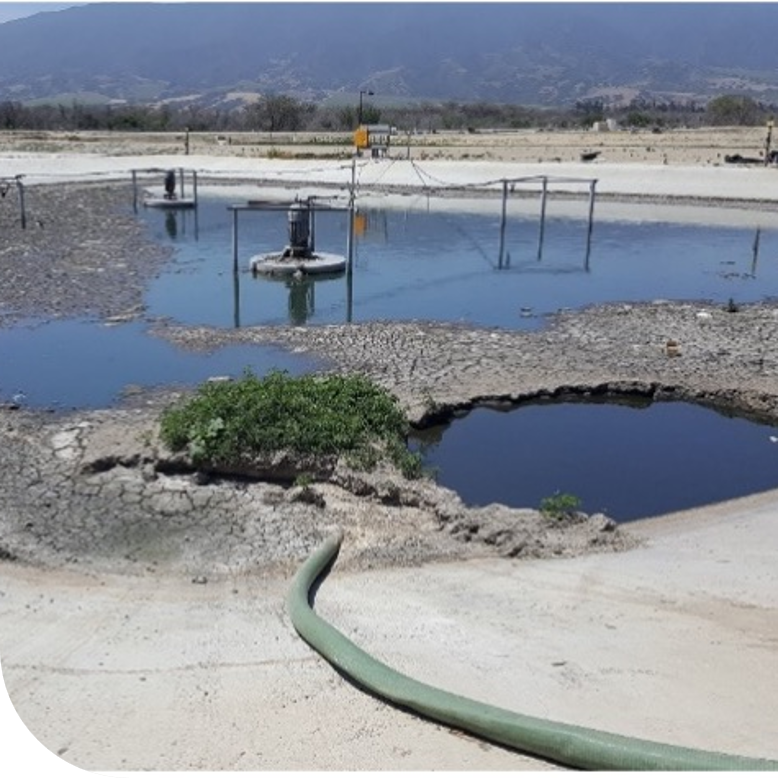
Where the Cost Shows Up Before Dredging Does
The years leading up to a removal project carry their own expenses, and they rarely get attributed to sludge. They get attributed to equipment, or to staffing, or to a system that has simply become harder to run.
- Solids accumulating around diffusers and fixed equipment mean cleaning work that was never on the maintenance schedule.
- In-lagoon servicing gets harder and less safe as the layer deepens, and work that once happened from the bank starts requiring a boat.
- Troubleshooting hours climb, because readings stop lining up with expectations and the causes are no longer obvious.
- Staff time shifts from process control toward symptom management, which is the most expensive substitution of all.
None of that appears on an invoice labeled sludge. It shows up as overtime, as deferred projects elsewhere, and as an operating cost curve that bends upward for reasons nobody can fully account for. The dredging bill is the visible expense. It is not the first one.
What Lifecycle Cost Actually Includes
The most common mistake in evaluating lagoon equipment is deciding on two numbers: what the system costs to install, and how much oxygen it transfers per horsepower. Both compare easily on a spec sheet, which is exactly why they dominate the decision.
Neither number says anything about sludge.
Oxygen transfer efficiency describes what a system can do under controlled conditions. It says nothing about how thoroughly the lagoon actually gets mixed, where the dead zones end up, or whether solids keep settling in the areas the equipment never reaches. A system can post strong transfer numbers and still leave a facility accumulating sludge every year.
A lifecycle evaluation asks harder questions:
- Does the system mix the full lagoon volume, or aerate one section of it well?
- What does routine servicing require, and can it be done without entering the lagoon?
- Does performance hold through winter, or drop when the weather does?
- How does the system affect sludge accumulation over ten or twenty years?
- What will the facility spend on removal projects across the life of the equipment?
Those answers rarely favor the lowest bid. Equipment that costs less to install and more to own is common in lagoon treatment, and the gap does not surface until years later, when it arrives as lost volume and a removal project.
Prevention Is Usually Cheaper Than Correction
The operators who avoid large removal projects are not lucky. They treat sludge as something managed continuously rather than something to be dealt with eventually.
In practice that starts with knowing the number. A facility surveying sludge depth on a regular schedule can track accumulation against the 25 percent threshold and see a removal project coming years out, which turns it into a planned expense rather than an emergency one.
Monitoring performance alongside it, particularly retention time and where dissolved oxygen readings diverge from expectations, usually reveals something more useful. Accumulation is never uniform. Solids collect where circulation is weakest.
That is where equipment stops being a line item and becomes the deciding factor. A system that moves the full lagoon volume is doing prevention work continuously, in a way that a system aerating one section well cannot. Keeping solids in suspension and oxygen distributed through the zones where sludge would otherwise settle is the principle behind the aeration and mixing systems Titus WWS builds.
Worth being straight about the limits. Prevention does not eliminate sludge. Part of what accumulates is non-volatile material that biology cannot break down, and that fraction will require physical removal eventually no matter how well a lagoon is mixed.
What management changes is the timeline and the volume: less material, further out, on a schedule the facility picks. Once several feet have accumulated, the options narrow and every one of them costs more.
Lagoon Sludge Removal FAQs
How do you measure sludge depth in a lagoon?
Sludge depth is measured with a weighted disk, depth pole, or clear-tube core sampler, taken across a uniform grid rather than at a single spot. NC State Extension’s survey guidance calls for at least six points per acre, up to 24 total, with a minimum of eight on lagoons under about 1.33 acres. Keep readings off the embankment slopes, then average them.
How often should a lagoon sludge survey be done?
For municipal lagoons, survey frequency comes from your NPDES permit rather than from a single federal rule. Common engineering practice is a survey every five years, moving to annual checks as accumulation advances. Agricultural lagoons are stricter in some states: North Carolina’s adoption of NRCS Conservation Practice Standard 359 requires an annual survey after five years of operation.
How do municipalities pay for lagoon sludge removal?
Sludge removal counts as infrastructure rehabilitation rather than routine maintenance, which makes it eligible for Clean Water State Revolving Fund assistance under EPA guidance. The Bipartisan Infrastructure Law added $11.7 billion to that fund through 2026, with 49 percent of supplemental funds set aside as grants and forgivable loans. Communities of 10,000 or fewer can also pursue USDA Rural Development water and waste programs.
What happens to lagoon sludge after it is removed?
Removed sludge is dewatered first, then disinfected to class A, or Class B depending on the local regulations, then land applied, landfilled, or incinerated. Across the national biosolids stream, EPA reported that for 2022 roughly 56 percent was land applied, 24 percent landfilled, and 16 percent incinerated. Land application of Class B material is governed by 40 CFR Part 503 and carries site use restrictions.
Does adding bacteria or enzyme products reduce lagoon sludge?
Independent evidence is thinner than the marketing suggests. A 2025 controlled field trial in Water Environment Research dosed pulp and paper treatment basins continuously and found no significant improvement against a control, and the authors noted that few third-party demonstrations exist. Dosing a product is also a different mechanism from restoring the mixing and oxygen conditions a lagoon needs.
How do you measure sludge depth in a lagoon?
Sludge depth is measured with a weighted disk, depth pole, or clear-tube core sampler, taken across a uniform grid rather than at a single spot. NC State Extension’s survey guidance calls for at least six points per acre, up to 24 total, with a minimum of eight on lagoons under about 1.33 acres. Keep readings off the embankment slopes, then average them.
How often should a lagoon sludge survey be done?
For municipal lagoons, survey frequency comes from your NPDES permit rather than from a single federal rule. Common engineering practice is a survey every five years, moving to annual checks as accumulation advances. Agricultural lagoons are stricter in some states: North Carolina’s adoption of NRCS Conservation Practice Standard 359 requires an annual survey after five years of operation.
How do municipalities pay for lagoon sludge removal?
Sludge removal counts as infrastructure rehabilitation rather than routine maintenance, which makes it eligible for Clean Water State Revolving Fund assistance under EPA guidance. The Bipartisan Infrastructure Law added $11.7 billion to that fund through 2026, with 49 percent of supplemental funds set aside as grants and forgivable loans. Communities of 10,000 or fewer can also pursue USDA Rural Development water and waste programs.
What happens to lagoon sludge after it is removed?
Removed sludge is dewatered first, then disinfected to class A, or Class B depending on the local regulations, then land applied, landfilled, or incinerated. Across the national biosolids stream, EPA reported that for 2022 roughly 56 percent was land applied, 24 percent landfilled, and 16 percent incinerated. Land application of Class B material is governed by 40 CFR Part 503 and carries site use restrictions.
Does adding bacteria or enzyme products reduce lagoon sludge?
Independent evidence is thinner than the marketing suggests. A 2025 controlled field trial in Water Environment Research dosed pulp and paper treatment basins continuously and found no significant improvement against a control, and the authors noted that few third-party demonstrations exist. Dosing a product is also a different mechanism from restoring the mixing and oxygen conditions a lagoon needs.
The Cost You Cannot See Yet
Electricity, chemicals, and labor all get scrutinized every budget cycle, because each one arrives as a statement somebody has to approve. Sludge never does. It builds outside the operating budget, and then the entire cost comes due in a single year.
That timeline is also the opportunity. A lagoon accumulating sludge is not a lost cause, and a lagoon that gets measured regularly is not a surprise waiting to happen. Knowing your sludge depth, and knowing how much of the lagoon your equipment is actually mixing, changes the question from when the bill arrives to how far out it can be pushed.
If you want a clearer read on where your lagoon stands, talk with the team at Titus WWS about your sludge levels and current mixing coverage.