
One treatment plant spent nearly three decades fighting what everyone agreed was a FOG problem. The lagoon surface was coated in a thick, greasy-looking layer, and when something like that shows up, FOG (fats, oil, and grease) is the obvious answer. FOG in wastewater is one of the most common headaches operators face, so nobody questioned the diagnosis. They treated it as FOG.
For thirty years, nothing worked. The layer stayed, the complaints kept coming, and the one question that mattered never got asked: what if it wasn’t FOG at all?
It wasn’t. It never had been, and once you see why, thirty years of failure starts to make sense.
The Usual Suspect: Why FOG Gets the Blame
Before we get to what the layer actually was, it helps to understand why FOG was such a believable answer. The assumption was not lazy. It was the most reasonable explanation available, and that is exactly what made it so hard to let go of.
FOG is one of the most common problems in wastewater. It comes from kitchens, restaurants, and food processing facilities, anywhere fats, oils, and grease get sent down the drain. As that material moves through a collection system, it cools, separates, and congeals. It builds up in lift stations and wet wells, coats equipment, and rises to the surface of lagoons in thick, greasy mats. When an operator sees a layer like that, FOG is almost always the right call, because most of the time, it is.
So when this plant saw yellow blobs spreading across the headworks surface, they did what any experienced operator would do. They called it FOG and treated it like FOG.
Here is the part that matters, though. Real FOG responds to treatment. It is organic, which means the right bacteria can digest it, surfactants can emulsify it, and aggressive mixing and aeration can keep it broken up and moving instead of letting it settle into a mat. FOG is a known problem with known solutions. That is exactly what makes a FOG diagnosis feel safe.
Which is also why thirty years of failure should have been the first clue. When a problem refuses to respond to every proven FOG treatment available, sometimes the issue is not the treatment. It is the diagnosis.
Thirty Years of Treating the Wrong Problem
To be clear, this was not a case of operators ignoring the problem. They chased it hard. Over the years, they worked through the entire FOG playbook, and on paper, every move was the right one.
| What They Tried | Why It Works on Real FOG | What Happened Here |
|---|---|---|
| Chemical treatments (degreasers and surfactants) | Break apart and emulsify grease so it disperses instead of building up | The layer stayed exactly where it was |
| Biological additives (bacteria and enzymes) | Digest the organic fats and oils that make up FOG | No measurable reduction, season after season |
| Physical removal and operational adjustments | Clear the existing buildup and keep it from returning | The layer kept reforming on the surface |
Every one of these works on real FOG. That is the point. The plant was not using the wrong tools. They were using the right tools on the wrong problem, and the results never moved.
In hindsight, that total lack of response was the clue. Real FOG gives a little. It breaks down, it thins, it shifts. Something that ignores chemicals, shrugs off bacteria, and refuses to clear no matter what you do is not behaving like grease at all. But when you are certain you know what you are looking at, a failed treatment does not look like a wrong diagnosis. It just looks like a reason to try the next thing. So that is what they did, season after season, for nearly three decades.
The breakthrough did not come from a better FOG treatment. It came from someone finally asking a different question.
Identifying the Real Source: It Was Never FOG
The breakthrough did not come from a better treatment. It came from Titus Wastewater Solutions doing the one thing thirty years of effort had skipped. The team sent a sample of the layer to a laboratory to find out what it actually was.
The result: it was not FOG. It was beeswax.
A beekeeper upstream had been washing out hives, and the wax was entering the sewer system and traveling to the plant, where it collected on the headworks surface year after year. That single detail explained three decades of failure. Beeswax is not grease. It is biologically stable, which means the bacteria and enzymes used to digest FOG cannot break it down, and the degreasers and surfactants built to emulsify fats and oils have nothing to act on. Every treatment the plant tried was designed for organic grease. None of it was ever going to touch wax.
Once the source was identified, the fix finally became clear, and it was not downstream at all. Instead of treating the headworks endlessly, the plant could address the problem where it started, by working with the upstream contributor to keep the wax out of the system in the first place.
Thirty years of treatment could not solve a problem that one lab test and one conversation did.
When It Actually Is FOG: How Titus WWS Handles It
Beeswax is the exception, not the rule. The overwhelming majority of the time, a greasy layer at the plant headworks or in a lift station really is FOG, and it is one of the most persistent problems in wastewater. The lesson is not that FOG is rarely the culprit. It is that you have to confirm the culprit before you treat it. Once you know you are dealing with real FOG, the fix is proven.
And real FOG is fixable for a specific reason: it is organic, so it responds to the right conditions. The trouble is that in lift stations, wet wells, and on lagoon surfaces, FOG cools, separates, and congeals into mats faster than most systems can keep up with. The goal is to stop it from settling in the first place.
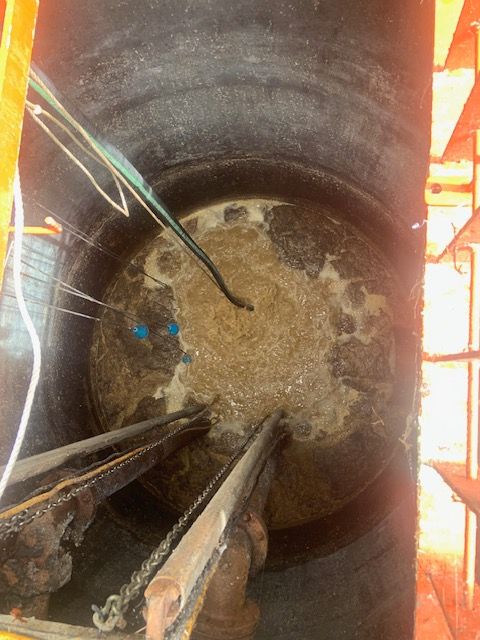
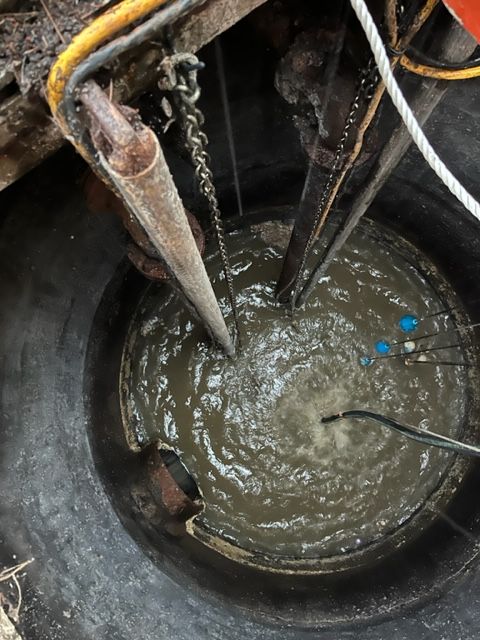
That is exactly what the Twister Mixing Aerator is built to do. Instead of letting FOG collect and harden, it breaks down the FOG into microparticles, so the grease never gets the chance. With the addition of ozone, it will further break down FOG by shearing the FOG molecules, making them more bioavailable for the bacteria in the system. This makes your plant more efficient at digesting the FOG.
- Aggressive mixing keeps fats, oils, and grease suspended and broken up, so they stay bioavailable instead of matting on the surface or coating equipment.
- Ozone breaks down FOG at the molecular level for even better digestion.
- Efficient oxygen transfer feeds the biology that digests organic material, so treatment keeps working instead of stalling out.
- Air-driven operation with no moving parts in the water means no propellers or paddles to rag up and fail, which is what keeps FOG-heavy lift stations running with far less maintenance.
For lagoons and larger basins, the Twister-FL Floating Aerator applies the same principle across a wider area. Either way, the point holds: when the problem actually is FOG, this is the kind of solution that treats it at the source, before it becomes the buildup that drives odor complaints, corrosion, and emergency pump-outs.
FAQs About FOG in Wastewater
What is FOG in wastewater?
FOG stands for fats, oils, and grease, the organic material that enters wastewater from kitchens, restaurants, and food processing facilities. As it moves through a collection system it cools and congeals, building up in lift stations and wet wells and forming greasy mats on lagoon surfaces.
What can be mistaken for FOG in a lagoon?
A yellow-looking surface layer is not always FOG; other materials can look identical while resisting every treatment FOG normally responds to. In one real case, a layer treated as FOG for thirty years turned out to be beeswax, which standard FOG treatment could not break down.
What causes FOG buildup in lift stations?
FOG builds up in lift stations because flow slows and the wastewater cools, letting fats, oils, and grease separate out and congeal against walls, floats, and pumps. Without enough mixing and aeration to keep it suspended, it hardens into mats that restrict flow and drive odor and corrosion.
How do you identify the source of a FOG problem?
You identify the source by confirming what the material actually is before treating it, rather than assuming it is FOG. When a layer resists treatments that normally work on FOG, a lab analysis paired with tracing the discharge upstream turns guesswork into a clear answer.
How do you treat FOG in wastewater?
Real FOG is treated by keeping it suspended and broken up rather than letting it settle and harden, since it is organic and responds to the right conditions. Aggressive mixing plus efficient oxygen transfer keeps it bioavailable and feeds the biology that digests it, stopping the buildup that causes odor and corrosion.
What is FOG in wastewater?
FOG stands for fats, oils, and grease, the organic material that enters wastewater from kitchens, restaurants, and food processing facilities. As it moves through a collection system it cools and congeals, building up in lift stations and wet wells and forming greasy mats on lagoon surfaces.
What can be mistaken for FOG in a lagoon?
A yellow-looking surface layer is not always FOG; other materials can look identical while resisting every treatment FOG normally responds to. In one real case, a layer treated as FOG for thirty years turned out to be beeswax, which standard FOG treatment could not break down.
What causes FOG buildup in lift stations?
FOG builds up in lift stations because flow slows and the wastewater cools, letting fats, oils, and grease separate out and congeal against walls, floats, and pumps. Without enough mixing and aeration to keep it suspended, it hardens into mats that restrict flow and drive odor and corrosion.
How do you identify the source of a FOG problem?
You identify the source by confirming what the material actually is before treating it, rather than assuming it is FOG. When a layer resists treatments that normally work on FOG, a lab analysis paired with tracing the discharge upstream turns guesswork into a clear answer.
How do you treat FOG in wastewater?
Real FOG is treated by keeping it suspended and broken up rather than letting it settle and harden, since it is organic and responds to the right conditions. Aggressive mixing plus efficient oxygen transfer keeps it bioavailable and feeds the biology that digests it, stopping the buildup that causes odor and corrosion.
When the Treatment Keeps Failing, Question the Diagnosis
Wastewater systems take in complex and unpredictable inputs, and not every problem is what it appears to be. When an issue persists for years despite every reasonable fix, the most valuable next step is often not another treatment. It is stepping back to ask whether you actually know what you are dealing with. Most of the time the obvious answer is the right one. The skill is recognizing the moment it stops being right, because that is what saves years of wasted effort and budget.
This is the kind of problem Titus WWS helps facilities work through. Whether you are dealing with real FOG that keeps coming back or a persistent issue that has resisted everything you have tried, the team can help you confirm what is actually driving it and put the right solution in place at the source, instead of treating the same symptom on repeat.
If a problem at your facility refuses to go away no matter what you throw at it, talk to an expert at Titus Wastewater Solutions. The fix often starts with a better question, not a stronger chemical.