
Municipal wastewater is relatively predictable. Every community has its variations, but the basic composition of residential waste stays fairly consistent, and treatment systems are designed around that steady chemistry.
Industrial wastewater plays by entirely different rules.
Every facility produces its own waste stream, and the differences are rarely subtle. A food processor, a paper mill, and a slaughterhouse can operate in the same county and send three completely different problems down the pipe. That variability sits at the center of the industrial wastewater treatment challenges operators deal with every day, because the chemistry can shift by the industry, by the facility, and sometimes by the day of the week.
It is also why a treatment approach that runs flawlessly at one plant can fall apart at the next. Solving that gap is a large part of what Titus Wastewater Solutions does, and it starts with understanding just how different these waste streams really are.
Food Processing Wastewater Treatment: A Weekly Moving Target
Take food processing as the clearest example. On a normal production day, the wastewater entering the system stays relatively stable, and the biology doing the treatment work settles into a rhythm.
Then the weekly cleaning cycle hits.
Strong cleaning agents and acids enter the system all at once, and pH can swing far enough to disrupt the biological treatment process or stall it completely. The bacteria responsible for breaking down the waste do not recover on command, so a single sanitation cycle can set treatment back for days.
That is what makes food processing wastewater treatment so demanding. Operators are not managing one waste stream. They are managing a calm one and a chemically aggressive one in the same week, and the system has to handle both.
Not All Fats and Oils Break Down the Same Way
Chemistry is only one variable. The physical makeup of the waste matters just as much, and few things test a treatment system like fats, oils, and grease. Some break down on their own. Others fight the process the whole way.
| Vegetable Oils | Animal Fats | |
|---|---|---|
| Breakdown in biological treatment | Relatively easy | Difficult |
| Why | Readily consumed by bacteria | Long chains of fatty acids bacteria struggle to consume |
| Risk if untreated | Low | Accumulation, plus persistent treatment and odor problems |
| Typical handling | Standard biological treatment | Often needs pre-treatment to improve bioavailability |
The takeaway is simple: A system handling vegetable oils today can fall behind the moment animal fats take over the load.
When a Waste Stream Burns Through Oxygen
Some industrial waste does more than resist treatment. It actively competes for the oxygen the system needs to function.
Slaughterhouse wastewater is the clearest example. It often carries blood, and blood exists to move oxygen through the body, so it does exactly that once it enters a treatment system. It pulls oxygen out fast. Even small volumes can place a heavy demand on dissolved oxygen levels, and when oxygen drops, the biological process that depends on it starts to struggle.
That is why a high oxygen demand can quietly undermine an otherwise capable system. The waste is not just sitting in the water. It is consuming the very thing the treatment relies on.
Why Industrial Wastewater Treatment Can’t Be Copied Plant to Plant
The variety is not abstract. It plays out facility by facility, where the same treatment plan can carry one plant and quietly sink the next:
- Food Processing: Stable on a normal production day, then hit with cleaning agents and sharp pH swings during sanitation.
- Meat and Poultry Processing: Blood and heavy organic load that spike oxygen demand.
- Paper Mills: Fibrous material and a mix of processing chemicals that standard systems are not built to handle.
None of these problems is exotic on its own. What makes industrial wastewater treatment difficult is that they rarely show up in isolation, and they rarely hold still. A facility can run clean for weeks, then shift its production schedule, change a supplier, or run a heavier cleaning cycle, and the waste stream arriving at the plant is no longer the one the system was tuned for.
That is why copying a setup from another plant only gets you so far. Two facilities in the same industry can send very different loads down the pipe, so every system has to be matched to its own waste stream, treatment process, and operational rhythm. The plants that stay ahead of it are the ones engineered for variable waste streams, built to absorb the swings instead of reacting to them, which is exactly where the right equipment earns its place.
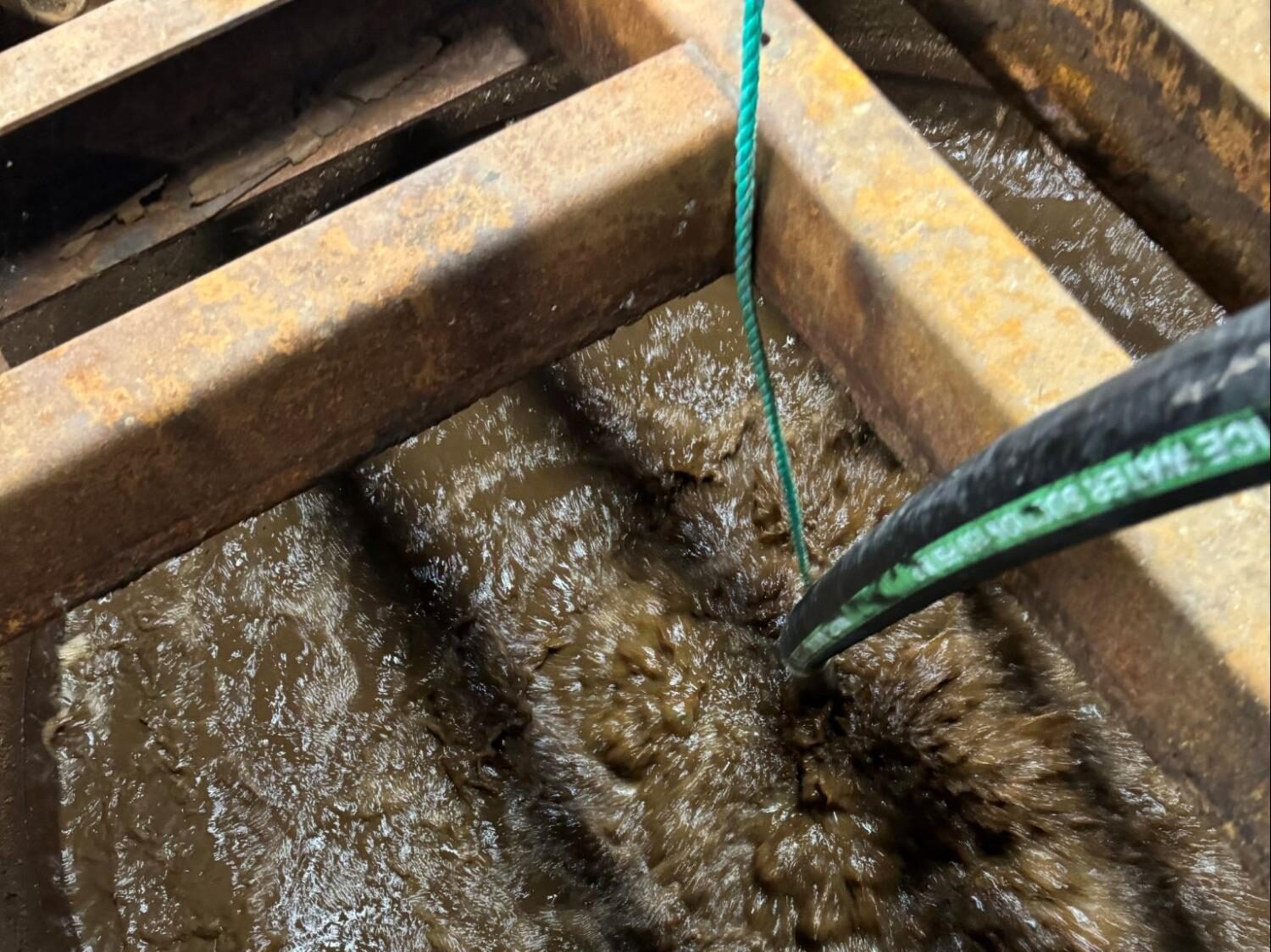
How the Right Mixing and Aeration Handle the Swings
If a waste stream will not hold still, the system treating it cannot be built for a single set of conditions. The goal shifts from matching one perfect chemistry to absorbing the swings as they come: the pH spikes, the oxygen crashes, the slugs of fat and solids that arrive without warning.
That is a mixing and aeration problem before it is anything else.
It is also where Titus WWS focuses. The Twister Mixing Aerator is built around that challenge, and it answers what an industrial stream throws off one problem at a time.
When oxygen demand spikes, efficient dissolved oxygen transfer keeps the biology working instead of stalling out under a heavy organic load.
When fats and grease threaten to settle and harden, aggressive mixing keeps them moving and breaks them up, so they stay bioavailable instead of collecting into the buildup that drives odor and maintenance calls.
And when wipes, rags, and debris show up, the unit keeps them suspended and intact rather than shredding them, letting a plant’s screening pull them out instead of passing the problem downstream. All of it runs on air-driven mixing with no moving parts in the water, which is what lets the system hold steady while the load underneath it keeps changing.
For facilities running lagoons or larger structures, the Twister-FL Floating Aerator applies the same principle across a wider area of influence. You cannot predict every swing an industrial waste stream will produce, but you can run a system designed to take them.
Why is industrial wastewater harder to treat than municipal wastewater?
Industrial wastewater is harder to treat because its composition changes constantly, while municipal wastewater stays relatively predictable. Every industry produces a different waste stream, and a single facility can shift its chemistry, oxygen demand, and solids load from one day to the next, so treatment has to adapt rather than run on a fixed setup.
What causes pH swings in industrial wastewater?
Sudden pH swings usually come from cleaning cycles and process chemicals. In food processing, for example, strong cleaning agents and acids enter the system during sanitation, which can disrupt or stall the biological treatment process until conditions stabilize.
Why are fats and oils difficult to treat in wastewater?
Fats and oils are difficult because they do not all break down the same way. Vegetable oils are consumed relatively easily, but animal fats form long chains of fatty acids that bacteria struggle to process, so they accumulate and cause persistent treatment and odor problems that often require pre-treatment.
How do you increase dissolved oxygen in wastewater with high oxygen demand?
The most effective way to hold dissolved oxygen under high demand is efficient aeration paired with mixing. Some industrial waste, like the blood in slaughterhouse wastewater, pulls oxygen down fast, so the system has to transfer oxygen efficiently and keep the load circulating to maintain aerobic conditions.
Common Questions About Industrial Wastewater Treatment
Why is industrial wastewater harder to treat than municipal wastewater?
Industrial wastewater is harder to treat because its composition changes constantly, while municipal wastewater stays relatively predictable. Every industry produces a different waste stream, and a single facility can shift its chemistry, oxygen demand, and solids load from one day to the next, so treatment has to adapt rather than run on a fixed setup.
What causes pH swings in industrial wastewater?
Sudden pH swings usually come from cleaning cycles and process chemicals. In food processing, for example, strong cleaning agents and acids enter the system during sanitation, which can disrupt or stall the biological treatment process until conditions stabilize.
Why are fats and oils difficult to treat in wastewater?
Fats and oils are difficult because they do not all break down the same way. Vegetable oils are consumed relatively easily, but animal fats form long chains of fatty acids that bacteria struggle to process, so they accumulate and cause persistent treatment and odor problems that often require pre-treatment.
How do you increase dissolved oxygen in wastewater with high oxygen demand?
The most effective way to hold dissolved oxygen under high demand is efficient aeration paired with mixing. Some industrial waste, like the blood in slaughterhouse wastewater, pulls oxygen down fast, so the system has to transfer oxygen efficiently and keep the load circulating to maintain aerobic conditions.
Built for the Stream in Front of You
No two industrial waste streams behave the same way, so the system treating yours should not be a copy of someone else’s. If your facility is fighting pH swings, FOG buildup, low dissolved oxygen, or a waste stream that changes faster than your treatment can keep up, that is usually a mixing and aeration problem worth solving at the source.
Talk to the Titus WWS team about what your stream is actually doing, and see which Twister unit is the right fit for it.