Wastewater odor complaints can overwhelm an operator’s day long before the first truck even rolls out. Neighbors call. Crews investigate. The smell fades, then comes roaring back without warning. For many municipalities, the pattern feels endless and the fix almost always seems to involve more chemicals, more equipment, or more trial-and-error than anyone has time for.
That is why the Titus team created something different. Instead of guessing, modeling, or dosing in the dark, they bring a lift station odor control demo directly to your site and let the system show what is really happening inside. No assumptions. No theoretical flow charts. Just real wastewater, real conditions, and real results.
Every lift station behaves differently, often changing hour by hour, which means odor control plans built on averages and lab conditions rarely match what is actually happening in the field. That is where a lift station odor control demo changes the conversation by putting a temporary system on site and treating real wastewater under live operating conditions, so operators can see how odor responds before committing to a permanent solution.
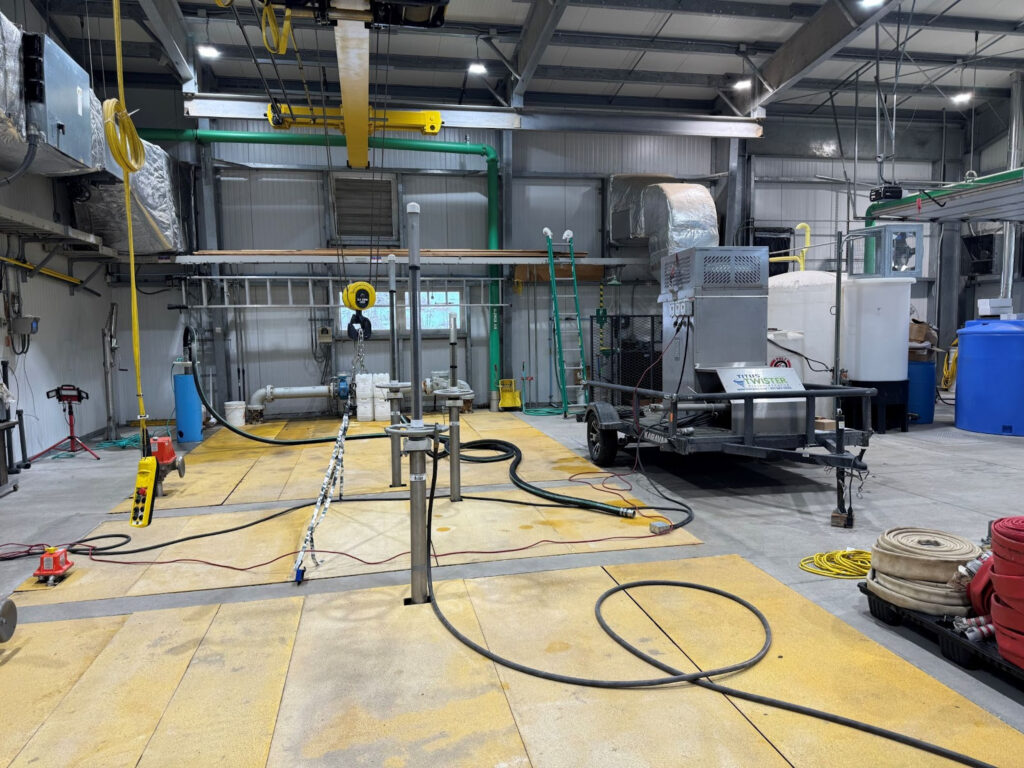
The best part? The process is straightforward. A mobile Titus Twister trailer arrives, drops into the wet well, and begins revealing exactly what level of treatment the station needs. Crews get to observe the reaction in real time and decide for themselves whether the approach solves the problem.
Before long, complaints disappear and something unexpected takes their place: compliments.
Why Offer a Free Demo?
Lift stations rarely behave the same way twice. Flow patterns shift throughout the day, incoming materials change by the hour, and the conditions that create odor often appear only under specific operating loads.
This makes planning difficult. Models and lab values can point in the right direction, but they cannot show how a station actually responds in real time. As Lewis Titus explains, “Engineers want cut-and-dried test data. But when it comes to lift stations, you are dealing with a constantly changing target.”
A lift station odor control demo fills this gap. It gives operators a clear look at how air mixing and ozone interact with real wastewater under real conditions. The demo reveals whether odor forms in the liquid phase, whether grease or biofilm are contributing, and how quickly those compounds react once treatment begins. Some stations require very little intervention. Others need a higher level of oxidation to penetrate layers of accumulated material. A demo exposes those differences immediately and gives municipal crews confidence by letting them watch the changes as they happen. For many utilities, this is the first time the system has provided clear, observable feedback. That clarity makes the next step easier and far more accurate.
How the Demo Works
Across the U.S., The Titus demo program is designed to show operators exactly how their lift station responds under real operating conditions. Each mobile trailer is equipped with a scalable system that allows the team to test different treatment levels without modifying existing infrastructure.
Every demo follows a consistent on-site process:
- Site Evaluation
The team reviews station type (gravity or force main), wet well depth, flow patterns, grease buildup, and sludge accumulation to understand baseline conditions. - Drop-in Deployment
The demo unit is placed directly into the wet well or discharge location so treatment occurs in the liquid phase. - Treatment Adjustment
The process begins with air-only mixing, then ozone is introduced gradually to identify the point where dissolved sulfides, grease, and other odor-forming compounds begin to break down. - Observation Period
The demo typically runs for one to two days, allowing operators to observe changes in odor, sludge, grease, and overall station performance under normal operating conditions.
As Lewis Titus often explains, the goal is simplicity. “We bring the equipment, drop it in the water, and let it speak for itself.”
Once the demonstration concludes, crews have firsthand knowledge of how their station behaves and what level of treatment produces consistent results. That information makes the next decision far more accurate and far less risky.
Immediate Impact, Lasting Impression
Most odor control programs promise improvement over time. For municipal crews, a lift station odor control demo shows what happens almost immediately when odor is treated at its source, under real operating conditions.
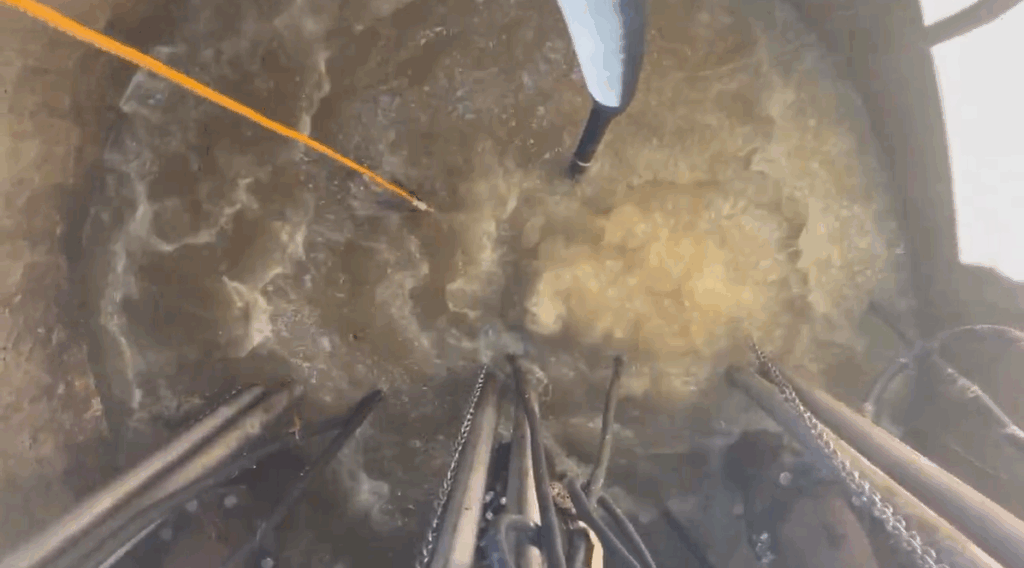
“Within five minutes, the smell is gone. By the next morning, the grease mat is gone. The sludge pile is gone. And the complaints? Also gone.”
That speed is what changes minds. During a demo, operators can document odor reduction as it happens instead of waiting weeks for chemical adjustments to settle in. In Idaho, a single Titus Twister demo replaced a decades-old carbon filter system at a meat-processing station. In Bend, Oregon, a homeowner sent a handwritten thank-you note just days after a demo began. Even high-security military facilities have adopted this approach after watching hydrogen sulfide levels fall from 150 parts per million to near zero within hours.
The “I’m Not Giving It Back” Problem
There is a clear pattern that emerges after a successful lift station odor control demo. It is not about initial excitement or short-term improvement. It is about what happens once municipal crews live with the system for several days.
Nobody wants it taken out.
Instead of asking whether the demo is working, teams begin asking different questions. What would it take to keep it in place? How many other stations could benefit from the same approach? When removal is mentioned, the response is often hesitation rather than agreement.
That shift shows up in real decisions.
- Yuba City, California chose to purchase the entire demo trailer after one deployment resolved long-standing odor issues.
- Bozeman, Montana expanded a single demonstration into a broader request for Titus Twister units across multiple pump stations.
- In Texas, a utility asked to extend the demo period to capture changing weekly conditions and size the system as accurately as possible.
These outcomes are not driven by pressure or sales tactics. They happen because crews have time to observe consistent performance under real operating conditions. When odor stays controlled, maintenance becomes easier, and complaints stop returning, confidence follows.
As Lewis Titus puts it, “Almost every place we go, they want to keep it. The only exceptions are when the unit was not sized correctly. It always comes back to proper sizing.”
At that point, the demo is no longer viewed as a trial. It has already proven its value.
How to Request a Demo
For municipal crews dealing with recurring odor complaints, the hardest part of odor control is not finding options. It is knowing which one will actually work in their system. That uncertainty is exactly what a lift station odor control demo is designed to remove.
Titus Wastewater Solutions offers on-site demos through regional partners across the country. The process typically requires only a short scheduling window and minimal preparation from local staff. There is no obligation and no long-term commitment required to get started.
Ready to see for yourself?
There are no chemical contracts and no pressure to move forward. Just results you can observe directly in your own lift station, under real operating conditions.
If you want a clearer path forward before committing to a permanent solution, the next step is simple. Contact Titus Wastewater Solutions to request a demo or connect with a local distributor to start the conversation.
“We let the equipment do the talking and the lift stations stop stinking.”